Seven Types of Atheism

Some geezer, John Gray, wrote a book having this title. It was, let us say, ‘suggested’ that I watch it in video format—over an hour-long at that. I decided to search for a summary instead.

It’s not particularly up my street. The bloke who suggested the vid posted a statement:

Atheism is a narcissistic apostasy; the adoration of the things humans do & make; the worship of the golden calves of science & technology.

When I responded thusly « This quip reduced and conflates, almost creating a strawman. I suppose some atheists might be narcissists, though I don’t see that they would significantly differ from a sample of the general population. I’m guessing the second clause is intended to connect from the first, which is to claim that an atheist is a human who chooses STEM over gods as if there are no other alternatives, which creates a false dichotomy. But to treat atheism as some monolith is to treat all religions as ostensibly identical », his response was

What is atheism?.

To which I replied, « Atheism is the absence of belief in gods (or supernatural beings, if that’s a more generalisable concept). »

well, that is not enlightening at all. Explain atheism clearly.

That is all there is to it. There are different reasons why people are atheists, but that’s the definition. Etymologically, ‘theism’ is ‘belief in a deity or deities’. Atheism, applying the Greek prefix ‘a-‘, is the negative state of ‘theism, so the absence of ‘belief in a deity or deities’.

Atheism is not science. A large number of scientists believe in God. They see no contradiction between God and science, in fact they find the order behind everything reinforces their belief.

And so here the conversation, as it was, went off the rails. At no point did I invoke science. And then he promotes the John Gray video.

Interview with John Gray on Does God Exist

And we’ve been there before.

  1. New Atheism: the debate between science and religion was a result of confusing myths with theories. Religion is no more a primitive type of science than is art or poetry; scientific inquiry answers a demand for an explanation; the practice of religion expresses a need for meaning.
  2. Secular Humanism: a hollowed-out version of the Christian belief in salvation in history; the widespread belief that humans are gradually improving is the central article of faith of modern humanism
  3. Science-Religion: Gray reflects on the twentieth century’s strange faith in science – a faith that produced the false equation of evolution with progress and the racist ideologies that infect our social arrangements and political institutions
  4. Political Religion: Modern political ideologies are de facto religions; the belief that we live in a secular age is an illusion
  5. God-hatred: absorbed by the problem of evil; suffering, if inevitable, is at least infused with moral significance
  6. The Unsentimental Atheisms of George Santayana and Joseph Conrad: Santayana dismisses any idea that civilization is improving; everything in this world is a progress towards death. Conrad wrote that man is a wicked animal; his wickedness has to be organized; society is essentially criminal – otherwise, it would not exist
  7. Mystical Atheism: Schopenhauer was deeply and articulately antagonistic to religion in general; he rejects the notion that history has any metaphysical meaning, or that human beings are somehow advancing

Disclaimer 1: This summary list is copy-pasted from the linked source and edited ever so slightly to fit here.

Disclaimer 2: Neither did I watch the video nor read his book, so the summary might be off-kilter.

Still, I offer my reaction/reflection.

Firstly, this comes off not as an attack on atheism; rather, it’s an attack more particularly on Enlightenment and post-Enlightenment thinkers, predominantly Scientists—as in those who practice Scientism religiously.

Secondly, this limited attack garners the same critique as I give Dawkins’ God Delusion. I liked this book, but whereas Gray limits his attack on a thin slice of atheists—despite offering up 7 flavours—, Dawkins limits his attack to Christians; perhaps, some Abrahamic denominations. This is a particular God and particular disciples.

I address these in turn.

  1. New Atheism: I agree that Scientism simply switched faith from God to Science or it deified Science, whichever vantage you prefer. This ilk simply swapped God for Naturalism. These are the same lot who offer up ‘Self-evident truths’ and Natural Law. Please. I agree with neither.
  2. Secular Humanism: Whilst admittedly secular, I am not quite a Humanist and decidedly not a Secular Humanist™. Here, I disagree with the underlying teleological notion of both.
  3. Science-Religion: The only nod I am willing to give to science is the evidence-based, falsifiability over faith, but much of science is still faith-based. It just operates from a different metanarrative. Again, Scientism is no one’s friend.
  4. Political Religion: I agree that this is as much a scourge as organised religion. By now, one might notice a trend—a healthy does of whataboutism: We can’t suck because we’re no different to this other thing that you might be attached to. Except they are all bollox through and through. Political ideology is religion without the blatant metaphysical nod—though it is still there beneath the surface.
  5. God-hatred: Even having not read the book, this makes no sense whatsoever. How can one hate what one doesn’t believe exists? I suppose I could hate unicorns, faeries, and Harry Potter, but I don’t think that’s the same thing. The summary suggests that it’s more about an obsession with evil, but I don’t have enough context to respond meaningfully. Do atheists actually believe in evil? I don’t. And, except idiomatically, I don’t personally know of others who do. Feels like a red herring.
  6. Unsentimental Atheisms: Satayana refutes the Secular Humanists. I’m buying what he’s selling. Conrad is taking a spin on evil but opting to label it wicked—a bit of a drama llama. I’m not buying it.
  7. Mystical Atheism: I like Schopenhauer—probably because he’s such an underdog. He did glean a bit from Buddhist philosophy. So have I. But Buddhism ranges from the secular to the sacred. I don’t tend to stray too far from the secular. I fully agree that history has no metaphysical meaning and human beings are not objectively advancing.

If anything, this is one of the longer posts I’ve made in a while. Thanks to the Copy-Paste Gods. Allahu Akbar, Oh Mighty. In the end, Santayana and Schopenhauer notwithstanding, I am still left with a why not neither.
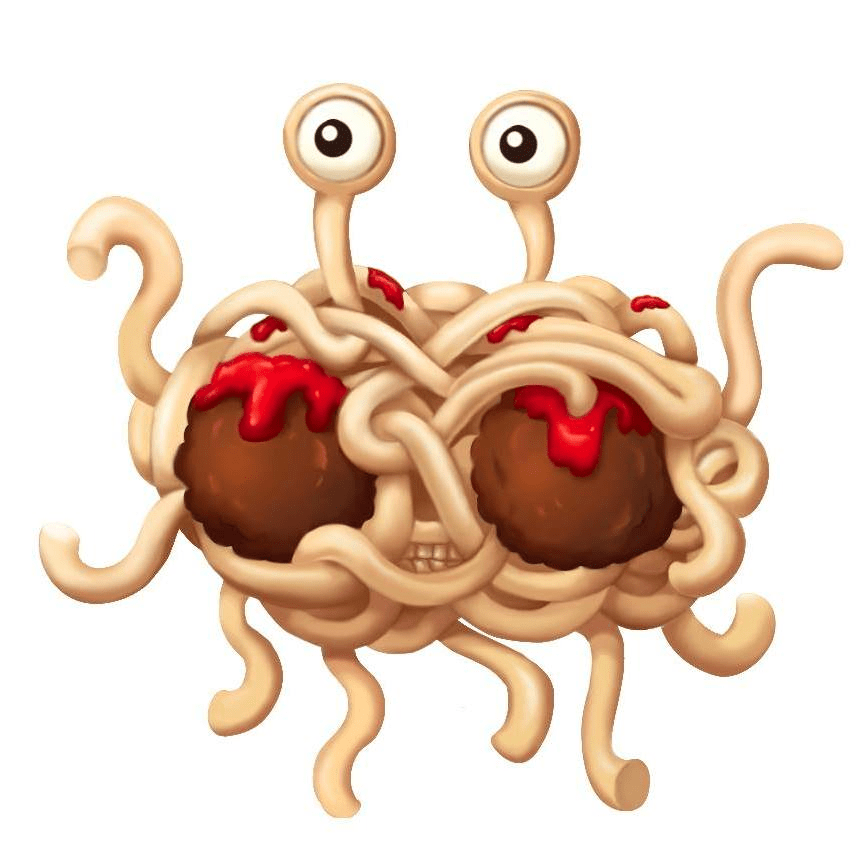
FSM

Superinstitutional Heros

I’ve never been a comic book guy or into heroes or superheroes. In fact, I have always had a thing for the underdog. This article points out The Batman’s Privilege Problem. I’ve skimmed a few comic books and graphic novels, and I’ve seen a few movies, but I am not really steeped in this space to speak to the nuance—and there is probably a difference between comics and graphic novels, but like I said: not inters. I just don’t identify with most of it. Not the violence. Not the Truth, Justice, and the American way of legacy Superman. But I do sense a privilege problem. Defenders of the status quo. I wonder if comic book aficionados tend to be more politically Conservative.

A quick Google search, and I’m mostly correct. Evidently, Marvel authors trend toward the Right. This article ranks some figures Conservative, Centrist, and Left, although the Left feel more Liberal than Left, and they are all constitutionalists. Apparently, X-Men were born of the Civil Rights movement in America in the 1960s. Still not my bag. Where are the Anarchists? At this rate, I’d settle for a Marxist.

One last mention: this piece points out that even where there are prominent social justice issues raised in one or another comic, the subtext (or overarching meta) is Conservative. This likely creates tension in a manner of speaking, but it creates dissonance for me.

I don’t have much more to add, but the article caught my fancy. It resonated for me, and having not posted for a while, I figured what the hell.

Around the World

I was reviewing my visitor stats, and I am happy to see extensive global coverage. North America—particularly the United States is my largest audience—, but South America, Australia, and Eurasia have representation. Africa is a bit spotty, and let’s not discuss Antarctica. I’m not sure about Greenland, but they don’t know about me either. Iceland represents, but not Svalbard, which admittedly, I’ve not heard of before. No offence.

South America is missing Bolivia, Guyana, French Giana, and Suriname. Iran, Afghanistan, and Turkmenistan are absent. Not Yemen or Oman either. I don’t know what I’ve done to North Korea, but they’ve shown me no love. I was hoping for something better from New Caledonia. I’m hoping they come through one of these days.

Africa may be distracted with other pressing issues, but I’m noticing kilometre after kilometre of no love—Niger, Chad, Sudan. Ghana, yes, but Togo and Benin are nos. The region from Western Sahara, Mauritania, Senegal, and Guinea. And the entire middle of the continent. And Tanzania and Madagascar? Forget about it.

If you happen to be visiting from one of these places, drop a note and say hello. If you are from any of the other places, do the same.

The Violence of Bureaucracy

Right. So another rabbit hole. Several things I have come across recently have mentioned the concept of bureaucracy as violence. There was a reference by David Graeber and some journal articles I happened upon. I have so much going on that I don’t have time to give the topic justice, but I wanted to employ this post as a reminder—along with the host of other reminders to which I need to attend.

Let’s start with some definitions.

Violence

The intentional use of physical force or power, threatened or actual, against oneself, another person, or against a group or community, that either results in or has a high likelihood of resulting in injury, death, psychological harm, maldevelopment or deprivation.

Parsing the salient parts, I distil the meaning for my intents and purposes to be the intentional use of physical force or power, threatened or actual, against oneself, another person, or against a group or community, that either results in or has a high likelihood of resulting in injury, death, psychological harm, maldevelopment or deprivation.

For further clarity, we arrive at a

Violence is the intentional use of power, against another person that results in psychological harm or deprivation

Bureaucracy

Management or administration marked by hierarchical authority among numerous offices and by fixed procedures.

Ostensibly, my train of thought is that bureaucracy is a deontological structure meant to standardise and normalise a process. Problems arise by the facts that (1) one size doesn’t fit all and (2) it’s a system thinking challenge likely missing dimensions—if the domain is even appropriately defined and accounted for at the start. This is where bureaucracy intersects violence.

bureaucracy becomes a Procrustean bed

In my mind, bureaucracy becomes a Procrustean bed. Speaking of bed… Fais dodo.

EDIT: In a manner of speaking, I might suggest that normalisation, as a rule, is violence, but I haven’t exactly thought it through. I am not particularly comfortable with the notion of self, so against whom would this violence be perpetrated? Nonetheless, this Procrustean notion still springs to mind—as a moulding. Some might consider it to be character-building. But his lot would either deny the violence or consider it to be a worthwhile crucible. But it’s only a crucible when this character outcome comports with their accepted ideal. The only leeway given is in consideration of those with poor childhoods leading to delinquency. This does not diminish the bloodlust for justice, but it allows for blame to be cast, if not on the perpetrator then on the parents or guardians. I digress.

Hannah Arendt spoke of the Banality of Evil. In a manner, the violence that is bureaucracy is just this sort of metaphoric evil. This 7-minute summary (that could have been 4 if not for the stammering and pauses) is about just this point. In my experience, most bureaucracy is of the sort Arendt write about. I feel that this presenter is a bit more conservative about where he might draw this line.

I’ll exit this post with an observation/rant. I was shopping the other day, and I had one item. There was a short queue situated between a cashier and a self-checkout kiosk. We customers seemed to be dequeuing fine when a frontend supervisor appeared to instruct us to choose a register. I was second in the queue so his interaction with the person ahead of me went something like this:

Employee: Are you going to use the self-checkout?

Customer: Yes

Employee: [Looks at the kiosk]

Customer: Unless this register becomes available first.

Customer: [Cocks head incredulously]

Employee: You need to choose one.

At that moment, the cashier freed, and she took the vacancy. Thankfully—as my mind pondered how illogical this policy was (if indeed there was a policy) and how poorly the maths skills of whoever created it—, the self-service registered became available. Crisis averted.

The takeaway in the story is that blood pressure was unnecessarily elevated because of this bureaucratic rule. This is trivial. I won’t bore you with more anecdotes. Besides, I’m pretty sure, you’ve experienced this violence to one degree or another—whether at work, in commerce, interacting with government workers, or who knows what.

What’s in a word?

Florida politicians have decided that ‘gay’ shan’t be uttered in their schools, their Senate having recently passed their ‘Don’t Say Gay‘ bill, a bill Tuesday that would prohibit “classroom discussion about sexual orientation or gender identity” in the state’s primary schools.

I don’t happen to agree with speech censorship, and I feel the politically correct speech vendetta is bollox. As a linguaphile, I don’t feel that words hold the meaning we ascribe to them. And I do feel it to be somewhat hypocritical for one group to say ‘don’t use words F, U, and N’ whilst simultaneously complaining that another side asks not to use other words—L, G, B, T, and Q’.

In the English-speaking West, we are concerned with words. Despite being raised hearing the familiar ‘sticks and stones may break my bones, but names shall never hurt me’, yet then worrying about hurtful words. It’s risible. Like the Floridian politicos, some people think words are magic—and not just like Harry Potter magic, or then again perhaps so.

I discovered when I lived in Japan that they don’t have swear words. This is a Western notion likely stemming from the repression generated by Abrahamic religions, commenced with not uttering the name of Jehova. And then we have levels of swear words. American and British English not only have different swear words, some of the same words fall into different offence-severity categories. I’ll get back to this. I recall when I studied French, pouring through my Larousse or Collins-Robert dictionary and seeing their asterisk system—ranging from 0 to 3.

Of course, 0-level words are everyday words one might choose to use in polite company. Level-1 words are considered to be mildly offensive. In English, these words might include damn, bitch, bastard, crap, or bollox—perhaps merde en français; level-2 words might be shit, bullshit, bollox, tits, arsehole, or asshole;—perhaps putain en français (not to be confused with poutine, which is not at all a swear word); level-3 words might include fuck and any of its derivatives, cocksucker, or cunt—perhaps pute en français. Interestingly, cunt is a level-3 word in American English, but more like a level-2 word in British English. At least it’s bandied about a lot more often. As for the French, con, operates at the same level as its British counterpart.

If this doesn’t convince the reader that it’s not all made up, I don’t know what will.

My point is that it’s not the words that hold the offence. It’s the intent behind them. For me, intent is just another weasel word. Unfortunately—and although entire legal systems are built on the concept—intent cannot be discerned. The culprit is intent, not lexical elements. And, yes, context is everything. Moderate politicians hoping on the PC bandwagon from the 1980s until now are the problem. Somehow, the wagon they hopped on is authoritarian and prescriptive—positions more often associated with people a bit further to the Right. But this still doesn’t address the notion of intent.

My position is that children are likely going to encounter same-sex couples. The agenda of those who don’t want it taught don’t want it to be normalised. Interestingly enough, Foucault—a notorious gay philosopher—argued against normalisation. It should be obvious that this would be his view given his position that normalisation is a control mechanism. Better to cherish the difference than to integrate.

Perception Is Not Reality

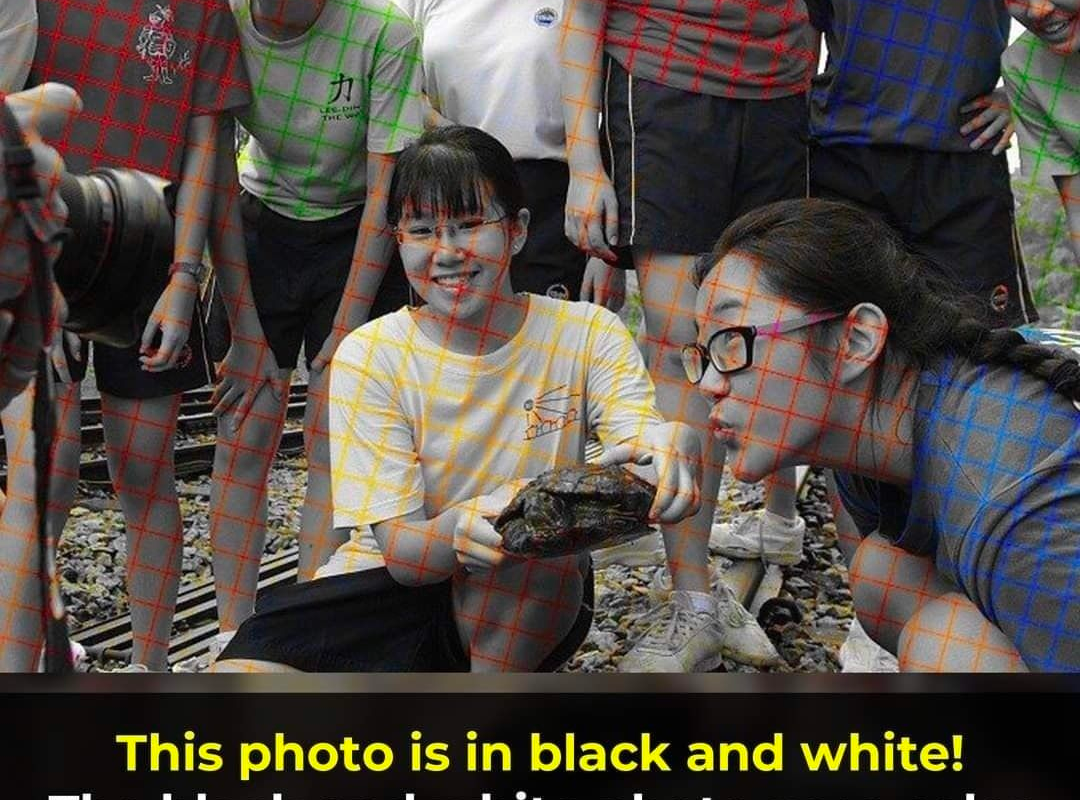
Nothing to add to what I’ve already said here. I just wanted to share another example of how our senses fill in what they expect rather than what is.

This photo is in black and white. It uses coloured grid lines to trick your brain into perceiving colour.

In other news, I just started reading Daniel Dennett’s classic Consciousness Explained. It starts with Brain in a Vat. Given that it was written in the late ’80s and published in the early ’90s, so it’s a bit behind the curve on the technology front. Artificial Intelligence—at least Machine Learning—wasn’t nearly as developed, and he didn’t quite grasp how fast and fast hardware and chip technology would advance in some 30 years. But this doesn’t alter the frame—just some peripheral details.

I’m not really even interested in consciousness. I favour Dennett’s take that consciousness is to the brain as wet is to water, so there’s not really any there there to find.

Monopoly on Reparations

Many places have histories of exploiting a group or groups to the advantage of others. Although this scenario applies to these people in a similar manner, I am thinking specifically of the exploitation and reparations due to the black and indigenous people of colour, BIPOC, in the United States.

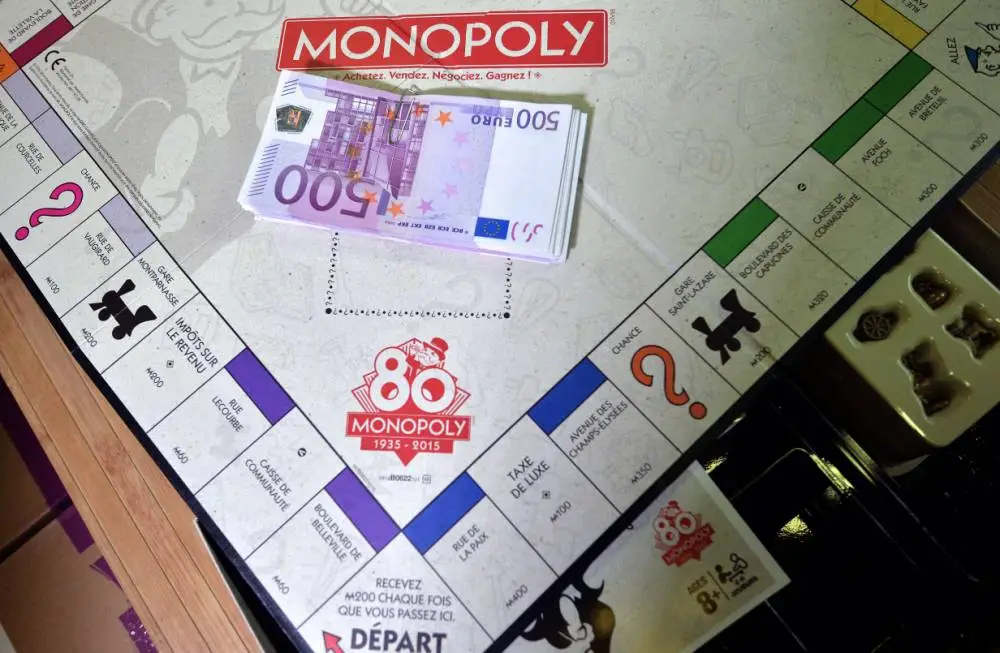
I believe that many people are familiar with Monopoly, the board game where, among other things, one accumulates properties and extracts rents from the other players. My intent is to illustrate with Monopoly the need for reparations, to illustrate why reparations are necessary to restore justice. This is a twist on John Rawls’ veil of ignorance thought experiment.

Slave auction advertisement

I have heard some people say that the past is the past, or if there were injustices in the past, that was ages ago, and now everyone has an equal chance. No special accommodations or affirmative actions are necessary. I don’t agree that this is true, but let’s just say for the sake of this exposition that opportunities are equal for everyone in a given society.

There are parallels between a game of Monopoly and the way we are thrown into this world. No one differs in this regard. We are all subject to a loin lottery.

Imagine that I already own all of the properties. You own none. Irrespective of how the game came to this condition, your chances of winning are nil to none. Now imagine that the reason for the disparate ownership was the result of a system of injustice perpetrated by the player I inherited my position from on the player you inherited yours.

No matter how fairly the game is from now until the end, if your starting place leaves me with all of the property and you without, your chances of winning are slim to none. Favouring tradition and inheritance already benefits some people over others, but when the benefit is the result of a pattern of injustices, it feels more egregious. Worse yet, even if I ‘give’ you Whitechapel Road, Baltic Avenue, or Rue Lecourbe and keep the rest, your chances have only slightly improved.

With the end of US Civil War and the emancipation proclamation, affected blacks were promised 40 acres and a mule. For most, this never happened. This remains an outstanding debt. And whilst 40 acres in some places would be a boon, not many today really need a mule, so descendants of slaves need to be made whole. Reparations are a way to accomplish this.

Reparations are payments in arrears to attempt to compensate for the centuries of an unbalanced playing field. And reparations should allow you to recover more than Whitechapel, Baltic, or Rue Lecourbe properties. At least get Bond Street, Pennsylvania Avenue, or Boulevard des Capucines. If you’ve played Monopoly, you’ll understand that this is still not enough.


Consciousness Is Religion

I expect that consciousness is a human nominative concept. Like religion, it will become smaller as science encroaches. In 1994, David Chalmers presented his idea of the hard problem of consciousness in a lecture, Toward a Scientific Basis of Consciousness, but I feel this is more due to the insufficiency of language than anything else. To me, consciousness isn’t well defined. It’s like a medical syndrome. It’s just a grouping of seemingly related conditions that haven’t yet been parsed. In time, it may be determined that they weren’t even related in the first place. Apophenia and cognitive dissonance are two significant human biases that affect perception.

At core, consciousness might be functionally reduced to that of an interpreter. Some have posited that the only thing that exists is ‘information’, whatever that means, so there only needs to be an interpreter—a translater. If that interpreter is defined as consciousness, then so be it. This appears to lead us to a Cartesian place—though it doesn’t follow that the self or ego exists. This would be a second-order event.

Anyway, just rambling. As seems to be the case lately, I’ve got little time to develop my thoughts. At least I’ve captured them for now.

Dear diary…

Nontonomy

Being critical of freedom, liberty, and autonomy is likely to make one the subject of scorn and derision. Most people tend to feel these things are self-evident attributes and goals, but they are all simply rhetorical functions. I was reading a passage in Mills’ On Liberty, where he posits

That the only purpose for which power can be rightfully exercised over any member of a civilized community, against his will, is to prevent harm to others. His own good, either physical or moral, is not a sufficient warrant … Over himself, over his body and mind, the individual is sovereign.

On Liberty, John Stuart Mill

It should come as no surprise that I question a position adopted by the Enlightenment Age. These geezers posited that many things were self-evident, but all of this is self-serving magical thinking, and there is no reason to have truck with any of it. These are all normative claims being dressed as positive, non-normative, ones, hoping to skirt scrutiny by employing a position of self-evidence.

I am generally critical of any notions of identity and self from the start, so affixing some attribute of power to it seems just silly.

It seems that I again am distilling this notion to a power equation. As a person, I want to claim power, if anything, over my self however that might be defined. And though, I would like this, too, it is nothing more than some emotional reaction.

Without delving into the depths of autonomy quite yet, on a proverbial desert island—as necessarily the case with any social constructs, where these notions are meaningless without a social context—adding a second person creates friction. Person A seemed to have full autonomy on this island—notwithstanding the other life forms on this island that are somehow never granted autonomy—now has had this autonomy reduced by the presence of Person B.

Firstly, Person A may have claimed this island to be their own. Given this, Person B is infringing on this autonomous decision, having arrived sequentially. Is Person B tresspassing? Does their presence harm Person B, be limiting their autonomy however slightly?

Mills’ concept is one of no harm: one is free to do what one chooses as so long as it doesn’t harm another. Accordingly, it says one is free to harm one’s self—essentially treating the self, the corpus, as personal property. Just as one could damage a piece of personal furniture, one could damage themself. I am not sure if Mills intend this to extend to suicide, but that’s not an important distinction here, so I’ll move on.

Let’s return to Person A on the island—only Person A is a woman and Person B is a fetus. What rights and autonomy does Person B now possess? For some, it has full autonomy; full personhood. Still, Person B is ostensibly trespassing, so does this autonomy even matter if it exists?

If you are Person X and own a house, and I, as Person Y, enter into it, how does this differ from A and B? Can you justify disallowing Person Y from exercising autonomy whilst supporting Person B? I don’t want to make this about abortion, so I’ll keep stop here.