Elephants in the wild are being poached by their tusks by inveterate assclowns, and the ones without tusks are becoming more prevalent. This trend is broader than the result of the tusked elephant population being depleted. The elephants with the tuskless genetic profile are reproducing offspring with this tuskless trait.
One particular criticism of non-cognitivism is that it is not intuitive (as if this is the arbiter of truth). Much of statistics is not intuitive. The behaviour of quarks and other quantum events are counter-intuitive. This is a poor argument, especially given the limitations of intuition—whatever that might be.
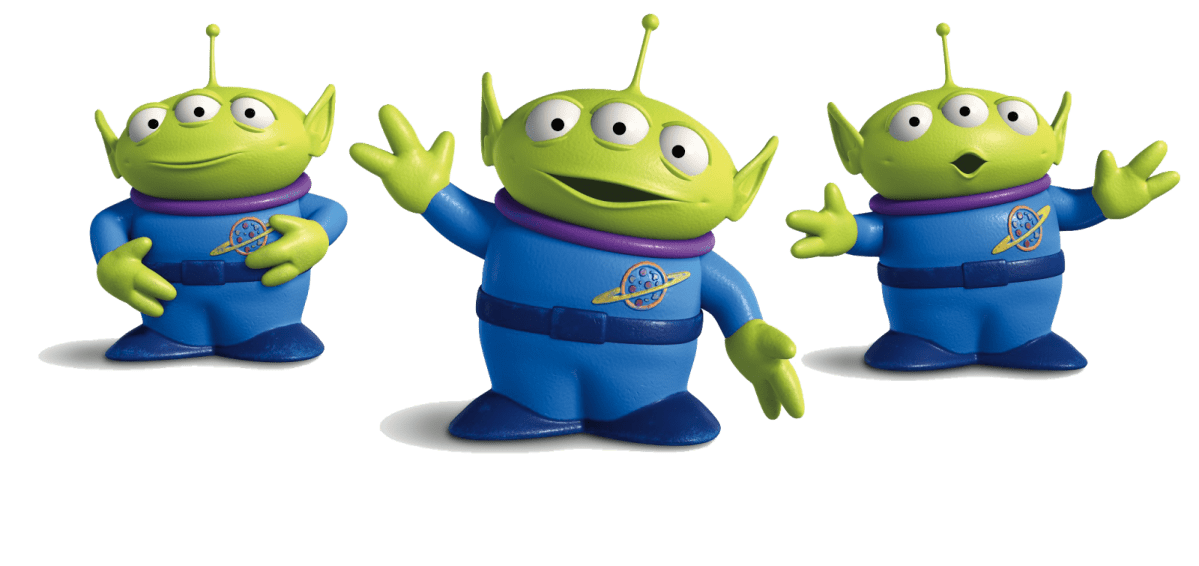
In his book Moral Realism, Kevin Delapp advances his belief ‘that as a descriptive thesis, noncognitivism appears exceptionally counterintuitive’. He advances with argumentum ad numeram(or ad populum—take your pick): Most speakers of most languages do not mean by “killing innocents is wrong” merely that they don’t approve of it, or even that they are simply endorsing a norm, no matter how universal in form. Rather they say, namely that killing innocents is literally wrong.’ Moreover, what people think they mean and what they mean may diverge widely. But these are petty arguments.
“Killing innocents is wrong.”
Let’s unpack the example Delapp uses. Let’s even move forward by accepting common idiomatic notions of these terms. The problem is one of scope. Keeping away from any metaphysical complications but considering a cosmic scope, how is this wrong?
Ignoring that people die routinely of natural and otherwise ‘unnatural’ causes—however these might even be classified—, the absence of some particular human or all humans or all life forms would have a nil effect on planetary motion, the birth and death or stars, or of the creation of other universes. An analogue might be similar to killing a single bacterium in your body, an event that happens countless times daily yet you don’t even notice.
The reason that this is considered wrong relates to hubris, the self-importance humans bestow themselves. It would be amazing for another lifeform with the capacity for language—a shared human language—to impose its parallel morality on earth-dwelling mortals…with the twist that they envision themselves as superior lifeforms. Of course, in the work, the earthlings would justify eliminating this hostile species—and vice versa. Yet neither would be right. As we do on earth now, we’d rely on our divine intuition and know that our vantage was the true one and these usurpers would need to be shown the error of their ways.
In any case, the only reason this logic is justified is by some argument of self-preservation, as if the universe somehow cares about this. Of course, the religious attribute the special place occupied by humans to be justified because we are God’s special children—but these are short-bus children indeed.
Returning to recast the original statement, ‘killing innocents is wrong’, we end up with something less than universal and quite contextual more along the lines of ‘killing [human] innocents is wrong [to me as a human with simple cognitive assessment skills and who has been socially indoctrinated to believe that humans are the most important lifeform in the entire universe or any possible multiverse]. Here wrong means ‘not conducive to the furthering of humanity‘, which is miles away from some claim with a deeper foundation, integrally woven into the fabric of space-time itself.
And when these people counter with, ‘would you want me to kill you’ (smugly clever, indeed), taking this to be some logical checkmate as opposed to the “I know you are but what am I” juvenile retort. Weak tea, indeed.
About a year ago, Matthew Franklin Cooper published a very short post, Why Language and Gender Aren’t Just ‘Social Constructs’. He never addresses his claim or even attempts to, as he goes off on some tangent about Plato’s dialogues, in particular, Cratylus, where he tries to imply some sort of good enough approach to accepting language, where he sets up a straw man that language does not have to be exact to be meaningful, a point no one is really arguing.
I hate to be the one to break it to him, but language is precisely a social construct. To be blunt, what reason would there be for a person absent another to have even invented language? Language exists—among other phatic purposes—to communicate. An isolated individual has no reason to communicate with him or herself.
As such, every lexical component of language is constructed. In fact, language is arbitrary and ever-changing, even if slowly. Temporally, compare the work of Chaucer, Shakspeare, the King James Bible, and a typical English text published in the 21st century and this becomes obvious. Apologies for the ethnocentric examples.
Geospatially, compare the English ‘tree’ with the French ‘arbre’ with the Spanish ‘arbol’. These terms are invented yet socially agreed upon representations of some referent. There is no reason in particular that a different word couldn’t have been employed instead. Notice, too, that in English we still retain the Latin form of ‘tree’ in the representation of Arbor Day.
The point is that these are social constructions. As for gender—and we’ve been on this territory before—, even the etymology reveals just how arbitrary these terms are.
Historically, we had male and female designations for adult humans, but children were not gender-delineated: In Middle English children were girls. All children. The word boy was reserved for young male servants, but was generalised to all male children whilst girl was specified for female children.
Clearly, this was just a convention adopted. I am not going to write about the tortured taxonomic constraints that create this supposed dichotomy, as it falls in a category familiar to astronomers and the debate over whether or not Pluto is a planet.
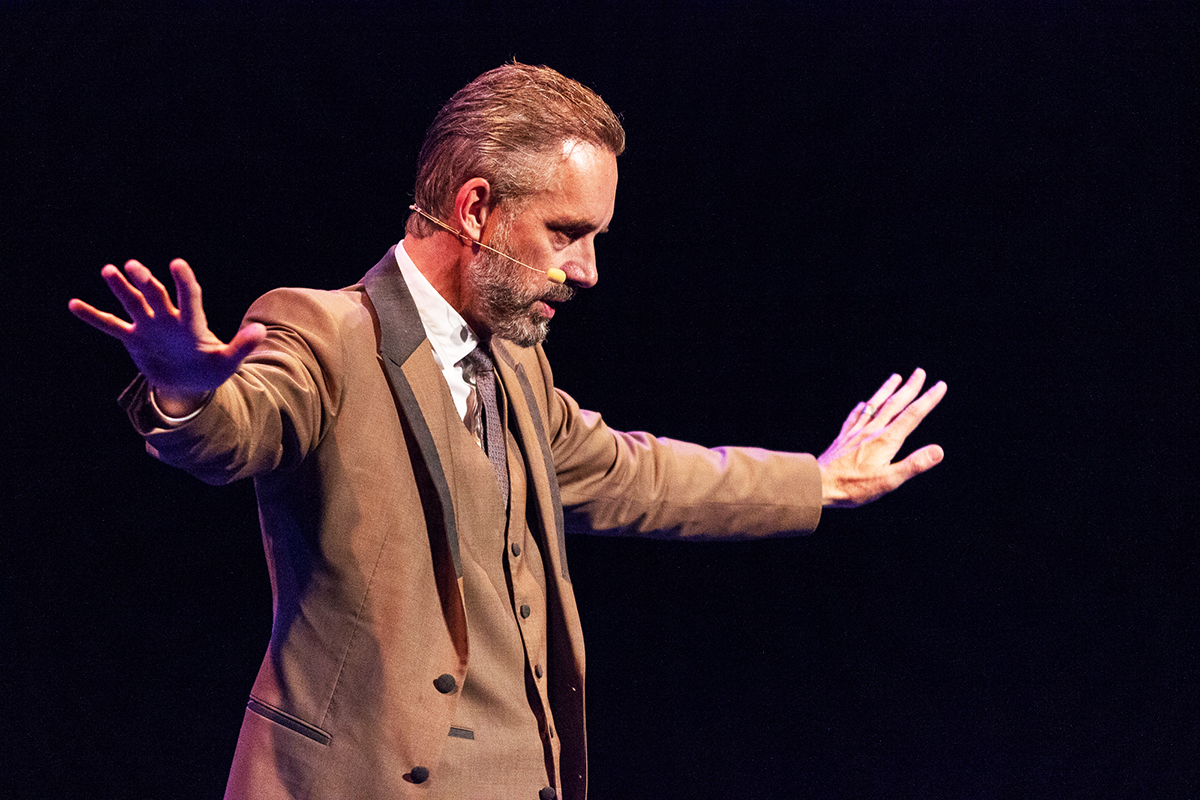
On the topic of social constructivism and cultural relativism, Jordan Peterson is both a vehement counter voice and a hypocritical adherent. This post calls out Peterson’s hypocrisy. To Peterson, the notion that people create their own reality and especially their own identity is heresy. Worse, he will not abide where someone wishes to be identified by some non-gender-performative pronoun.
In his world, it’s obvious that there are two each of singular, gendered subject pronouns and their correspondent object pronouns: he, she, him, and her. Betwixt the two shan’t ever meet. For people like Jordan Peterson, this arbitrary taxonomical classification is written in stone in a manner reflective of Moses encounter with God on the mount.
Peterson 23:13-15
There shalt be two and only two genders, male and female;
and all humans shall conform to these classifications;
and all humans shall dress and behave in compliance with these classifications
For people who view the world like Peterson, there is no distinction between sex and gender, so there is no CIS-this or CIS-that. They will accept for the minority of exceptions for hermaphrodites, but these people are freaks of nature and need to pick a path.
If you have were born with certain primary sexual traits, you must comply with gender stereotypes:
Male = Penis
Female = Vagina
And these are not cultural stereotypes, by the way; it’s obvious that this is Natural Law handed down from on high because identity is not an individual’s construct. If anything, you must accept with grace the identity society bestows upon you. If they perceive you as X, you had better conform to X or all hell will break loose, and your parents and friends will corral you into the X-mould, if you’ll only listen and comply. It’s for your own good.
Society knows best. If you can’t see it, that’s your problem. It our world, it’s majority rule, and if the masses perceive you as gender X, you had better comply. And don’t be a sissy about it. Purses are for women. Makeup is for women. Dresses are for women. Skirts are for women.
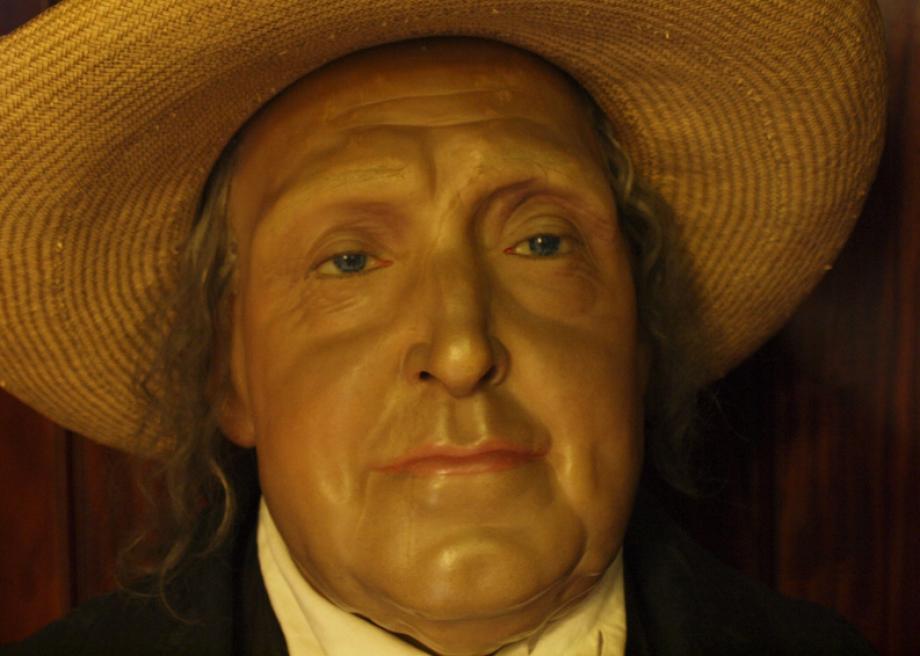
Image: Men wearing kiltsAs action figures are not dolls, kilts are not skirts; even so, don’t wear a kilt unless you are either Scottish or playing dress-up, but don’t play dress-up, and you’d better be toting a bagpipe or we’ll question your motives.
Where was I going with all of this?
At the same time, Peterson and his ilk defend universalism, they leave open the ability to envision their own deities as realities as they choose in a ‘it’s my personal god’ sort of way. They want to have their cake and eat it, too.
It’s fine to take a position of objectivism versus subjectivism. I mean you’d be wrong, but you don’t really get to cherry-pick from each where it is convenient. Actually, you do, but you’d be a hypocrite, so there’s that. Perhaps just logically inconsistent or disingenuous.
Magritte used art to comment on the distinction between the map and the territory. His The Treachery of Images, likely more commonly known as Ceci n’est pas une pipe, may be the most famous example in art.
Ceci n’est pas un GIF
The famous pipe. How people reproached me for it! And yet, could you stuff my pipe? No, it’s just a representation, is it not? So if I had written on my picture ‘This is a pipe’, I’d have been lying!
— René Magritte
People commonly or at least idiomatically refer to the terrain when they should be referencing the map. Likewise to the film Inception, we can recurse these maps all the way down. This is represented by the image above, Ceci n’est pas un GIF, which is a further reflection of Magritte’s work.
But the precursors of social constructionism predate post-structuralism. In fact, they predate structuralism itself. Although Surrealists like René Magritte were products of the post-structuralist era, there were hints of it at the dawn of the Enlightenment.
In 1772, Denis Diderot uses his story, Ceci n’est pas un conte (This is not a story) to demonstrate that a person’s behaviour is not in itself moral or immoral. Morality is not universal, and therefore it is not revealed either.
The point here is to underscore the difference between the referent and the symbol, whether by visual or auditory means. Dualist, René Descartes in his Cogito even understood this difference when he pointed out the ways each of the senses can be deceived. What he didn’t fully appreciate (or at least articulate) is how this disconnect is more prevalent than he had even considered.
Image: Perception is reality
Returning to the modern era, in 1966 Peter Berger published The Social Construction of Reality (PDF). This theory centres on the notion that human beings rationalise their experience by creating models of the social world and share and reify these models through language.
In closing, this is important because even when discussing facts about the world, we are still mired by perception. The legal system understands that eyewitness accounts of an event are among the least trustworthy. Ambiguity exists in language.
An example I used when I was teaching undergrads was the concept of fairness. Who felt that ‘things’ should be fair or that any person should be treated fairly. Accuse me of argument by anecdote if you must, but I have never encountered a person who disagreed with this notion.
But then the conversation got interesting: What was their perception of fair? Did it need to result in equality of outcome or was equality of opportunity sufficient? I wrote about this last year. Similar conversations happened when discussions arose over justice and so on.
My conclusion: There is no reason to believe humans’ employment of language results in a very precise representation of reality. There is even less reason to believe that language provides some vector to know moral truths—or any truths, really. The best course of action is to rely on the slight
My parting gift is this classic Annie Hall bit with Woody Allen and Diane Keaton.
Transcript:
Alvy Singer’s Therapist: How often do you sleep together?
Annie Hall’s Therapist: Do you have sex often?
Alvy Singer: [lamenting] Hardly ever. Maybe three times a week.
Annie Hall: [annoyed] Constantly. I’d say three times a week.
If everything is just “rhetoric” or “power” or “language,” there is no real way to judge anything.
Somehow, I happened across a blog post, Postmodernisms: What does *that* mean? Of course, this is right up my street, I skimmed a couple other posts on the site and followed some links to establish some contextual frame.
My by-now standard (read: autonomic) reaction to this line of questioning is that this is a correct assessment of the conditional statement.
If everything is just X, Y, or Z, there is no real way to judge anything.
Before evaluating the entirety of the content, let’s look at the lexical choices, in particular:
everything: Realising that this is hyperbole. I am going to assume that the author did not mean that everything is X, Y, or Z. I believe he means everything within some imagined yet undefined domain. I’ll guess that this domain relates to some moral or social sphere. Anything employs the same hyperbole, so I’ll ignore it.
just: This rhetorically modifies X, Y, and Z, in order to diminish them for the reader, to make them appear petty.
real: I believe the term he was looking for is objective or perhaps ontological. Otherwise, we’ll need to discern what he considers to be real versus not real.
Also, notice the use of or as a conjunction. This seems odd, as the listed items do not have equal weight or effect. Rhetoric does not exist without language, and power really feels out of place, Michel Foucault’s law of the instrument complicity notwithstanding. To him, power was his litmus.
Constructionism
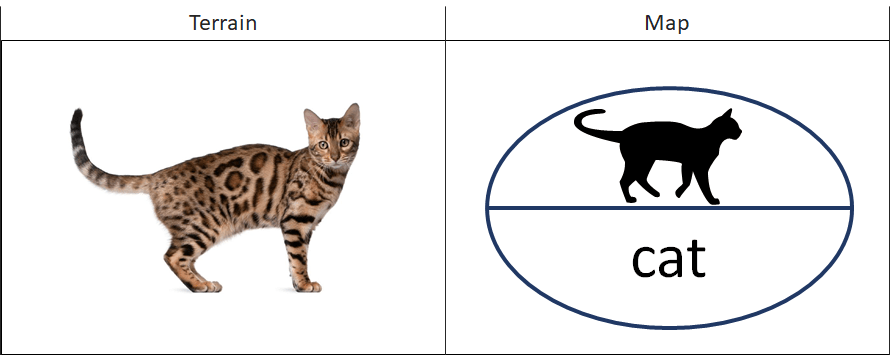
Firstly, all social perception is the result of the construct of human language. Of course, there is the physical world that exists independently of humans and perception—perhaps this is the real world where real judgments occur. Let’s label this real world the terrain. The earth and the larger universe would exist absent of humans. In fact, it had for aeons and will persist for many aeons beyond the last semblance of humanity. Humans are also real, if ephemeral, on a grander scale.
If this independent, objective, real world is the terrain, language is the map. We use language to communicate and make sense of the terrain, but it is only a representation based on our imperfect sense faculties.
Image: Symbolic language mapping of terrain
So when one makes a claim that everything [sic] is, say, language, they are making a claim similar to that of Saussure. Saussure was a structuralist. In fact, post-structuralism (or its expanded form labelled post-modernism) was a reaction against structuralists. Within the context of this post, Saussure believed that if one could fully qualify the structure of language, one could achieve a one-to-one fidelity relationship of the map to the terrain.
Post-structuralists pointed out all of the reasons why this was a fool’s errand. Like a geographical map, it is only a representation of the underlying terrain. Language serves the purpose of communication including expression and phatic aspects. One form of communication is rhetoric, which is a form employed for the purpose of persuasion. One possibility of this persuasion is to gain and retain power—or to at least win the upper hand in your argument. I suppose this is where the original statement starts to coalesce: rhetoric, power, and language.
All models are wrong, but some are useful.My point, then, is that our language map is always disconnected from the terrain. Moreover, it can be a pretty low fidelity map indeed. So when one says that everything is language, they are making a claim that we can not acquire this real knowledge. We can make sensory observations and construct narratives about it.
If you’ve ever taken a basic communications class, you’ve probably experienced the telephone game. Perception works in a similar manner. There are many things of which we have little or no experience save for conveyance through language. But as with the telephone game, fidelity can be lost. This is less likely to be a problem when interfacing with the so-called real world of rock and trees and of lions and tigers and bears.
Image: Symbolic language mapping of nebulous concept
It is more likely to become a problem when dealing with non-ontic concepts, these ‘things’ that would not exist without humans or, more critically, without language. These artificial (in contrast to real) concepts are things like goodness, justice, democracy, liberty, sovereignty, nations, and on and on, ad nauseum. Humans have constructed narratives about all of these, but if the last human were to die tomorrow, these concepts would die, too. Whether some new lifeform would eventually evolve to develop language and further develop these concepts is debatable.
Judging
All of this aside, let’s look at the perceived intent of this statement, which is the same sentiment behind Nietzsche’s ‘God is dead’ quip.
As has been discussed, the Enlightenment replaced God with Nature and Nietzsche realised that if this worldview were universally adopted, the tyrannic role that God and gods had played could not be leveraged to maintain control or power, much in the same way that the divine rights or kings had withered and died. God played a vital role in this narrative. Nature, particularly human nature, was a weak substitute. This said, moral and natural realists, quickly (and relatively successfully) filled the void with cognitive filler, a perfect pairing for budding Enlightenment thinkers.
Given that even if there were some objective morality (terrain), there is no reason to believe that a human could gain access to it. Previously, priests and pharaohs claimed to possess this ability, but this vector was no longer extant or accessible. Even if a person did have this power through some miracle of some sort or another (or another or another), what reason (other than convincing rhetoric) would one have to believe him (or her—but let’s be honest; it’s pretty much all hims).
Without access to this objective morality, we are left with creating some subjective morality. I fully admit that trying to gain consensus and compliance to a known-to-be constructed moral code would be akin to herding cats. It is no doubt that society would operate more efficiently if all constituents follow the same code.
If wouldn’t matter if this society adopted, say, monogamy over polygamy, so long as everyone accepted this as the rules of engagement. Cultural subjectivism would provide a moral framework for this situation, We have many examples of social arrangements where this is the mode of operation.
Sports are an example. There are rules. Players agree on the rules, protocols, and procedures, and they operate within this socially constructed framework. There is no objective sportsball deity on high that conveyed the commandments, and yet it works.
Locke and Rousseau each wrote about social contracts. Granted, they believed in a supernatural Nature with a capital N, but they still felt that people could operate as a society based on some sort compact or accord.
This missing element would be power because those in power could not use some higher power to justify their actions especially in regard to retributive justice and so on.
Commentary
What I still don’t understand after all these years is how this logic works. It is eerily similar to Pascale’s Wager.
If notSOME CONDITION, then not DESIRED OUTCOME therefore FABRICATE SOME CONDITION
If not[belief in God], then not [eternity of bliss in Heaven; instead eternal suffering in Hell, so double down] therefore [convince yourself of or feign belief in God]
If not [objective means of judgment], then not [real judgment] therefore [delude yourself into the belief that an objective means of judgment exists]
Emotivism and the rest are categorised under the non-cognitivist branch whilst ethical subjectivism falls into the cognitivist bucket. Intuitively, humans appear to have an innate bias toward accepting cognitivism, much in the same way as they seem to be wired to believe in supernatural concepts and see images of Jesus in toast. Whether these are vestiges of some successful evolutionary strategy is beside the point, but the problem it creates is that, in contrast, non-cognitivism is perceived as counterintuitive.
In its essence, cognitivism can be distilled down to the belief that moral statements are truth-apt, which is to say that they can be evaluated as true or false. Because of the current created by intuitionists, I lead with my fallback position, which is one of ethical subjectivism or more likely error theory.
Heads I win; Tails you lose
Although for reasons I’ll articulate later, entering a conversation assuming truth-aptness, the conversation can at least focus on the compositionality and universality components because whether I believe that moral statements cannot be evaluated as true or false, the default cognitive position of the general population is that they can be. This is not to say that I identify as a quasi-realist, which is to believe that there is no truth-aptness but to behave (pretend) that they do.
Image: Deciding the truth-aptness of a moral claim
God Is Dead
In his critique of Enlightenment beliefs, Nietzsche declared that ‘God is dead’ as he understood the implications of a society absent a justification for not only believing that morality claims are truth-apt but that they are true, divinated from some metaphysical, supernatural, and universal power. In practice, the Enlightenment replaced God with a rather animated and interactive concept of Nature, hence were born all sorts of natural rights. You may get a sense of some déjà vu, as humans, not being particularly creative, just reappropriated and rebranded the same tropes Theists use prior to that. They just performed a search-and-replace of God with Nature in a manner similar to the Christian appropriation of pagan holidays.
Image: God is dead
Non-cognitivism has generally fallen out of favour primarily because it was sort of painted into a corner by the Frege-Geach (embedding) problem, but this issue is only intractable if you accept the given frame.
I should probably just link out to a different source to explain the Frege-Geach problem because I feel it’s a red herring, which only presents a problem if you accept the frame established by the Structuralist
The problem here is that language is a complex, socially constructed communication system. Even if we accept Chomsky’s theory of the innate ability to parse language, the syntax, lexicon, and grammar are still arbitrary human constructs. I can’t likely repeat this point often enough: humans have a poor track record of creating and comprehending complex systems, examples of which are the various half-cocked socio-political, economic, jurisprudent, and philosophical systems. Hubris is evidently a successful evolutionary selection factor, as it persists everywhere and certainly in people of power.
The logical positivists ran into a similar problem when they proposed the verification principle that asserted that a statement is only truth-apt if it is either an ANALYTICAL statement or a SYNTHETIC statement, and yet this assertion with neither analytical nor synthetic, so it itself does not meet the verification principle. It’s simply a normative prescription.
Fundamentally, this quandary underscores the deficiencies of the constructed language system more than anything else, what I am developing with a working title of Insufficiency Theory. A tangent to this theory is my concept that the only moral truth (and many social truths) are simply rhetorical victories—situations where one agent employing rhetorical devices has convinced others as the truth of some condition.
Intermission
A problem with writing an unstructured stream of consciousness is that you look up and realise your post is getting pretty lengthy, and there is a lot more depth than you expected. Due to this, I am going to unpack this over several posts over several days.
Disclaimer
DISCLAIMER: I am not a professionally-trained philosopher, linguist, psychologist, or gynaecologist for that matter. I had considered studying Linguistics at uni as well as Philosophy, but I opted instead to study Economics and Finance, as these appeared to be more pragmatic. As relates to philosophy and language, I am an autodidact. This said, this particular area is new to me, so I am certain that I am missing key elements and may have large gaps in my understanding. In some cases, I’ve read more excerpts and others’ perspective on these people and their work than their actual work product. I am trying to catch up, but that leads me to a place fraught with selection and affirmation bias—though I do try to comprehend counter arguments as well. Moreover, I am painfully well aware of the Dunning-Kruger effect, and I am trying to allow for enough time to elapse to move further along this curve.



![Quarks[1]](https://philosophics.blog/wp-content/uploads/2018/07/quarks1.png?w=1200)



![commandments-inline1[1]](https://philosophics.blog/wp-content/uploads/2018/07/commandments-inline11.jpg?w=1200)
![9-_TfKGzN5RMaeAoFS7-SMlaQ2d5d1ZFBwRHnnkZtmw94pkdSsIUTFFT3WGHhpjGaUSjR30Ajjg2XAkPqhTaIEp2vnIv8I9nNhsZcANmL15h14s0XNBJCdsXXEzNWXOQU1[1]](https://philosophics.blog/wp-content/uploads/2018/07/9-_tfkgzn5rmaeaofs7-smlaq2d5d1zfbwrhnnkztmw94pkdssiutfft3wghhpjgausjr30ajjg2xakpqhtaiep2vniv8i9nnhszcanml15h14s0xnbjcdsxxeznwxoqu11.jpg?w=1200)
![266257282_640[1]](https://philosophics.blog/wp-content/uploads/2018/07/266257282_6401.jpg?w=1200)


![quote-all-models-are-wrong-but-some-are-useful-george-e-p-box-53-42-27[1]](https://philosophics.blog/wp-content/uploads/2018/07/quote-all-models-are-wrong-but-some-are-useful-george-e-p-box-53-42-271.jpg?w=1200)

![John+Locke+-+Jean+Jacques+Rousseau[1]](https://philosophics.blog/wp-content/uploads/2018/07/johnlocke-jeanjacquesrousseau1.jpg?w=1200)
![jessica-brooke-real-lesbian-wedding-orlando-florida-alternative-life-photography-design-first-kiss[1]](https://philosophics.blog/wp-content/uploads/2018/07/jessica-brooke-real-lesbian-wedding-orlando-florida-alternative-life-photography-design-first-kiss1.jpg?w=1200)


![dunning-kruger-graph[1]](https://philosophics.blog/wp-content/uploads/2018/07/dunning-kruger-graph1.gif)


