
La goutte d’eau qui fait déborder le vase.
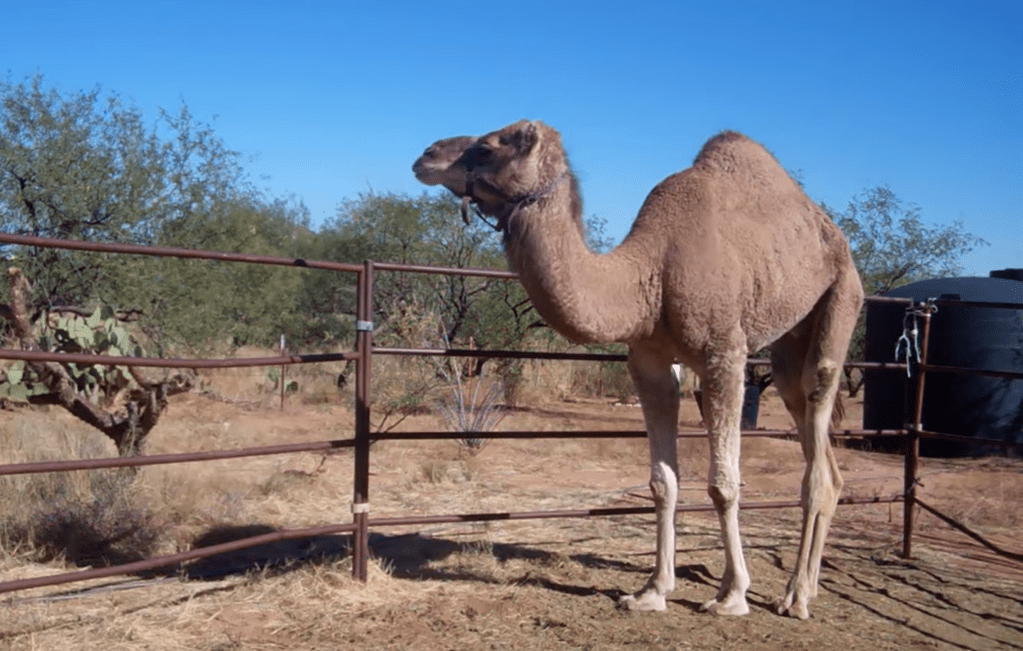
In grappling with anti-agency or non-agency, I am still trying to find apt metaphors. My latest find is the straw that broke the camel’s back. That, or death by a thousand papercuts.
My contention is that because humans have no material agency, they still have no responsibility—even if I were to agree that the world did allow for free will, is determined, semi-determined, or determined.

All of our genetics, epigenetics, and heredity along with our socio-environmental programming, any agency we might have to exert is essentially the straw that breaks the camel’s back. This story is meant to teach that the final straw cannot be seen in isolation. This straw is not responsible for breaking the camel’s back. It’s just one of a thousand papercuts, to switch metaphors for effect. We don’t get to claim that the last straw has some magical powers. If we have agency, it’s homoeopathic and hardly enough to attribute responsibility.
My point is that even if humans are effectively free to choose in the moment as people have proposed, is this sufficient to grant agency cum responsibility? I am reading John Martin Fischer’s Compatibilism chapter in Four Views on Free Will, where he gives an example of not deliberating about whether to jump to the moon because (in part at least) [he] would not successfully jump to the moon, even if [he] were to
choose to jump to the moon. I feel the same goes for other non-choices.
If I have only ever watched action movies my entire life or only even drunk Coca Cola, given the choice of an action movie or a romance movie or a Coke or a Pepsi, what choice am I making? It can be said that I can ‘choose’ to watch an adventure movie and a Coke, but in fact, I am habituated to these ‘choices’.
I recall a book by Thomas Moore titled Care for the Soul. In chapter 2, he conveys the story of a man with an alcoholic father, who can either become an alcoholic like his father or abstain. Presumably, he can also moderate a middle path. My contention is that his apparent choice will be pathological. Following is the easiest narrative—monkey-see, monkey-do. If he resists, it’s a reaction, not a choice. Even if he ‘chooses’ a middle path, it’s only reactionary.
An example from my own life experience played out like this. My grandfather was an MIT engineer, but (according to the family narrative), he was a weak man controlled by his wife, who capitalised on real estate purchases during the Great Depression of the 1930s. My dad’s response was to determine that higher education was pointless. He got a high school diploma and became a successful real estate developerõall the while keeping a chip on his shoulder. Whilst my high school classmates were prepping for college with family support, I was told that I would not be supported and that I would have to pay for it myself. (I didn’t qualify for standard loans because my family had too much money. The institutions didn’t care that I had no access to my parents’ money.)
At this point, I just wanted to attend university to acquire knowledge and figure things out. I didn’t even have a major in mind. I just wanted more input because there was nothing I was interested in.
According to Sartre, we always at least have the choice to persist or perish, yet even this isn’t true.
To be honest, I feel like I have choices and have made choices, but I also know I have been fooled by magicians’ illusions. I don’t know the mechanics of these tricks either, but I know that they work because of cognitive flaws or gaps. It’s not much of a leap to accept that free will and agency can operate in the same gaps.
EDIT: As I continue to digest Fischer’s position, I am thinking he is talking about gross motor skills whilst I am trying to focus on fine motor skills, and there’s a disconnect. Free will is gross motor, but agency is fine.
 Philosophics