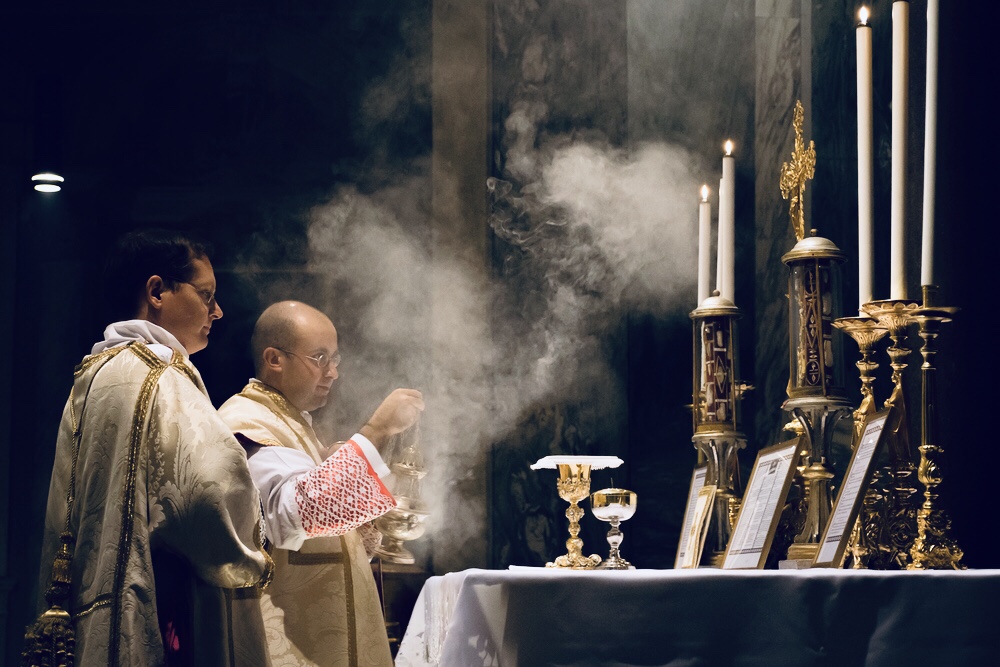
I was chatting with some Catholics on Social Media, responding to a post about the need to grow their base. I sympathised that it must be difficult because the product of organised religion was not exactly tailor-fit. Protestants have provision for roll-your-own, but not Catholics. This led me to a discussion about what Jung wrote about rituals – that it doesn’t matter if the underlying rationale was remembered because some people like ritual for its own sake – candles, incense, wafers, whatever.
(I studied Jung intensely in the mid-’90s, and while I still find him useful as metaphor, I don’t take his broader metaphysics seriously anymore – too mystical for my tastes. But this particular insight about ritual sticks.)
Follows are the unedited results.
Yes, and Jung was being quietly subversive about it. He was pointing to something most modern institutions would rather not hear.
For Carl Jung, ritual doesn’t need to be true in the propositional sense to be effective in the psychological one. Its power doesn’t reside in correct belief, historical accuracy, or even conscious assent. It resides in repetition, form, symbol, and the way those elements bypass the rational gatekeeper and go straight for the nervous system.
Which is precisely why ritual unnerves modernity.
Once you accept Jung’s claim, you’re forced to concede that meaning is not the primary engine of human orientation. Function is. A ritual can continue to stabilise, contain, and organise psychic life long after its original metaphysics has decayed, been forgotten, or become frankly unbelievable. The candles still work even if God has quietly slipped out the back.
This is deeply inconvenient for Enlightenment-descended sensibilities, which insist that symbols must justify themselves, that practices require reasons, and that belief precedes action. Jung flips that on its head. We act first. We kneel first. We chant first. Understanding, if it arrives at all, comes later as a kind of aftercare.
Which helps explain your mate’s conversion without invoking any sudden metaphysical awakening.
Catholic ritual functions even when belief wobbles. Protestantism, having stripped ritual back to avoid superstition, leaves belief carrying all the weight. Once belief falters, there’s nothing left to hold the structure together. No choreography. No inherited muscle memory. No symbolic surplus. Just a sermon competing with the rest of the week’s content.
Jung saw this coming. He understood that modern people would continue to need ritual even as they lost faith in the stories that once justified it. His worry wasn’t that people would abandon religion. It was that they would abandon ritual competence and then wonder why anxiety, fragmentation, and compensatory myth-making flooded in through the cracks.
From that angle, Catholicism’s current crisis looks different again.
The conservatives think ritual must be defended because it encodes truth.
The progressives think ritual can be loosened because truth can be updated.
Jung would have said both are missing the point.
Ritual persists because it does work that language cannot do. It orders time. It disciplines the body. It makes the invisible feel locally real. Strip away the incense, the repetition, the inherited forms, and you don’t get a purer faith. You get an exposed psyche scrambling for substitutes.
So when someone says, “I’m drawn to Catholicism because of the candles and incense,” they’re not being shallow. They’re being honest in a way theologians and sociologists often aren’t. They’re admitting that humans are not primarily convinced creatures.
They are conditioned ones.
Jung didn’t romanticise that fact. He warned about it. But he understood it well enough to say the thing modern institutions still resist admitting:
you can drain a ritual of meaning and it will still shape lives long after the doctrine has stopped persuading anyone.

 Philosophics