System Failure

The system is broken. It’s not just broken in the United States. It’s the entirety of Western Civilisation. It’s not time for a reboot. The virus is still inherent in the system. It’s time for a new system.

The reaction to this line of reasoning does something along the lines of, ‘It’s easy to criticise. What’s your solution?’ So let’s begin by parsing this enquiry.

Firstly, not all problems have solutions.

Humans, it seems, need resolution and closure. And they seem to gravitate towards easy answers, specious or otherwise. But humans have an abysmal track record of solving complex problems—political issues, social issues, economic issues, and so on. It’s not as much as there is no solution, per se, but that the interactions within the complexities are too many to consider. The system has a temporal dimension, which means even if I solve the problem at time-nought, the solution may not hold at time-prime.

Secondly, that one can recognise a problem does not mean one can fix it.

This was the denouement of Occupy Wall Street a few years back. They shed light on the problems, but those in charge—hawking ‘solutions’—established a frame wherein a problem without a solution is worse than a problem ‘remedied’ with the wrong solution. You don’t have to be a mechanic or body shop guy to recognise a smashed car even if you can’t fix it.

Auto smash

What then?

Harry Potter’s Hermione’s Magic Wand

If I had a magic wand, for a start, I’d abolish Capitalism, private property, and religion and go from there.

What’s wrong with private property?

‘Do you live on the street?’ is a typical response I hear when I suggest abolishing private property. ‘Give me your address. I suppose you wouldn’t mind if I moved in’ is another. I’ve discussed eliminating private property elsewhere, but the underlying problems remain:

  1. Why accept the usurpation of the commons to private property?
  2. Why accept the premise that one can own what one doesn’t possess?
  3. Why accept the premise of a first-come, first-served principle?
  4. Why accept, given the notion of property rights, that distribution must occur within the domain of economics?
  5. If one accepts that property should fall into the domain of economics, why not apply a ‘best use’ litmus instead of a ‘first come’ or ‘ability to purchase’ litmus?

Usurpation of the Commons

I don’t accept this usurpation. In nature, where conflict exists, violence or the threat of violence is the arbiter. As humans in nature, it’s no different. Like the meat one purchases behind the veil of a grocery mart, we are shielded from the inherent violence,

In many jurisdictions, property owners are justified in homicide if another person encroaches on their property. Many homeless or indigent people have tried to squat on unoccupied property only to be forcibly removed.
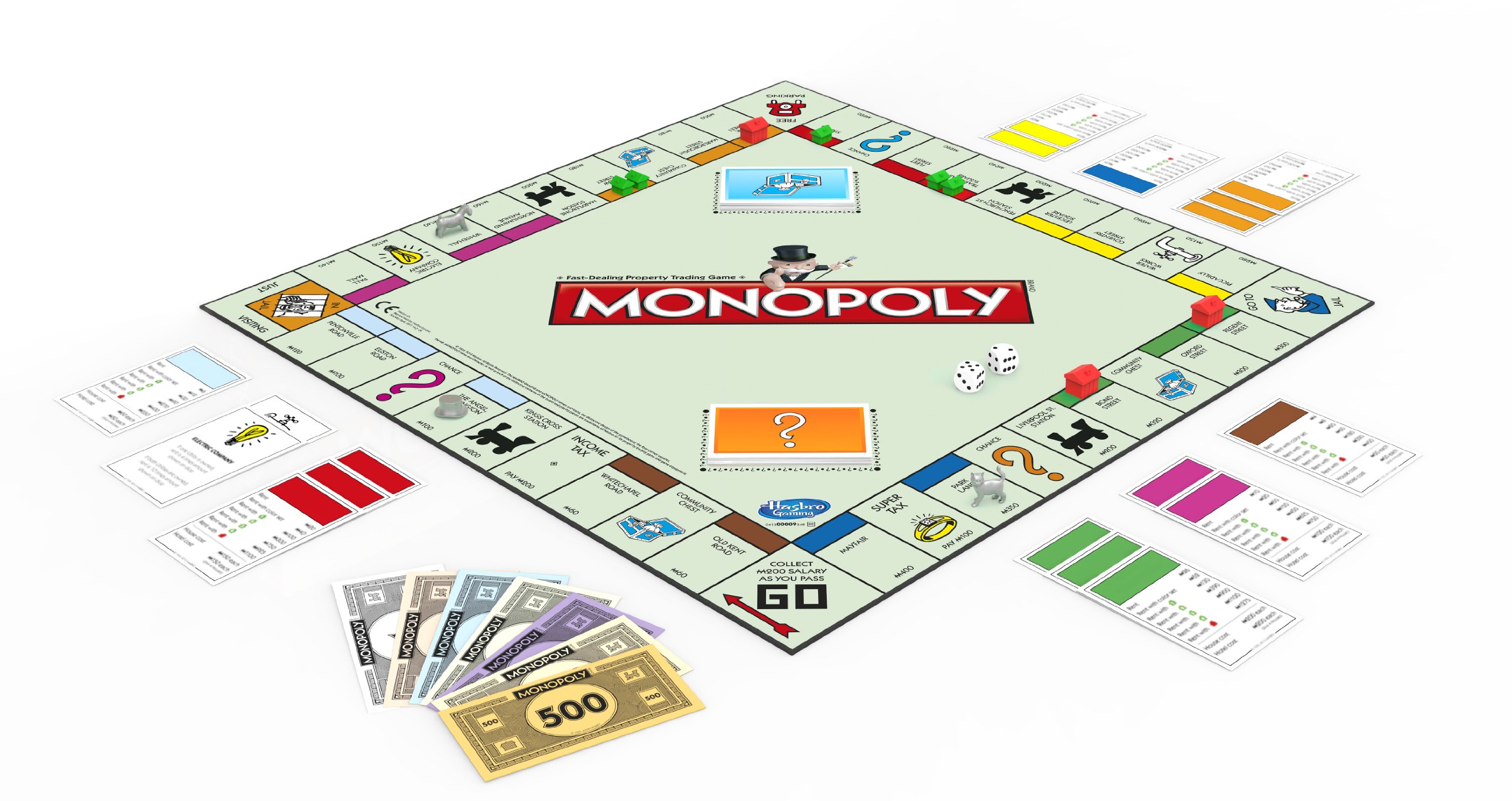
Monopoly Game Board

Property is like the game of musical chairs. And if you are late to the game, the chairs may already be taken. Imagine joining a game of monopoly late in the game and ownership of all the property has already been distributed. How do you think you might fare?

Possession is 9/10 of the Law

Possession is different to property. That I possess a place offers a different justification for my occupancy of it than a place that I own in absentia. Sure a philosophical argument could be made against any right to possess, but I’m not going there—at least not today.

This becomes a situation where usage is a determining factor. Can this ownership be justified if you’ve got a dozen places scattered around the globe?

First Come, First Served

It’s easy to see why this is in place: It’s simple. And at the start, there were few people and a seemingly infinite amount of land, but this was not sustainable. Land is ostensibly a fixed resource whilst humans multiply somewhat geometrically. So, given enough time, this allocation problem was predictable and inevitable.

But, given that property is something we insist on, what are the alternatives? Do we have a lottery periodically to redistribute property? Do we reset ownership whenever a new potentially qualifying owner emerges? Do we establish duration of ownership with some expiry? Do we not allow property to pass to forward generations? Or do we simply disallow ownership because this solution is too cumbersome to implement?

Disclaimer: In an attempt to economise my time yet still contribute content, this is a post dredged from Drafts (from May 2020) and posted with touchups in the manner of applying lipstick on a pig. Sadly, it’s still relevant.
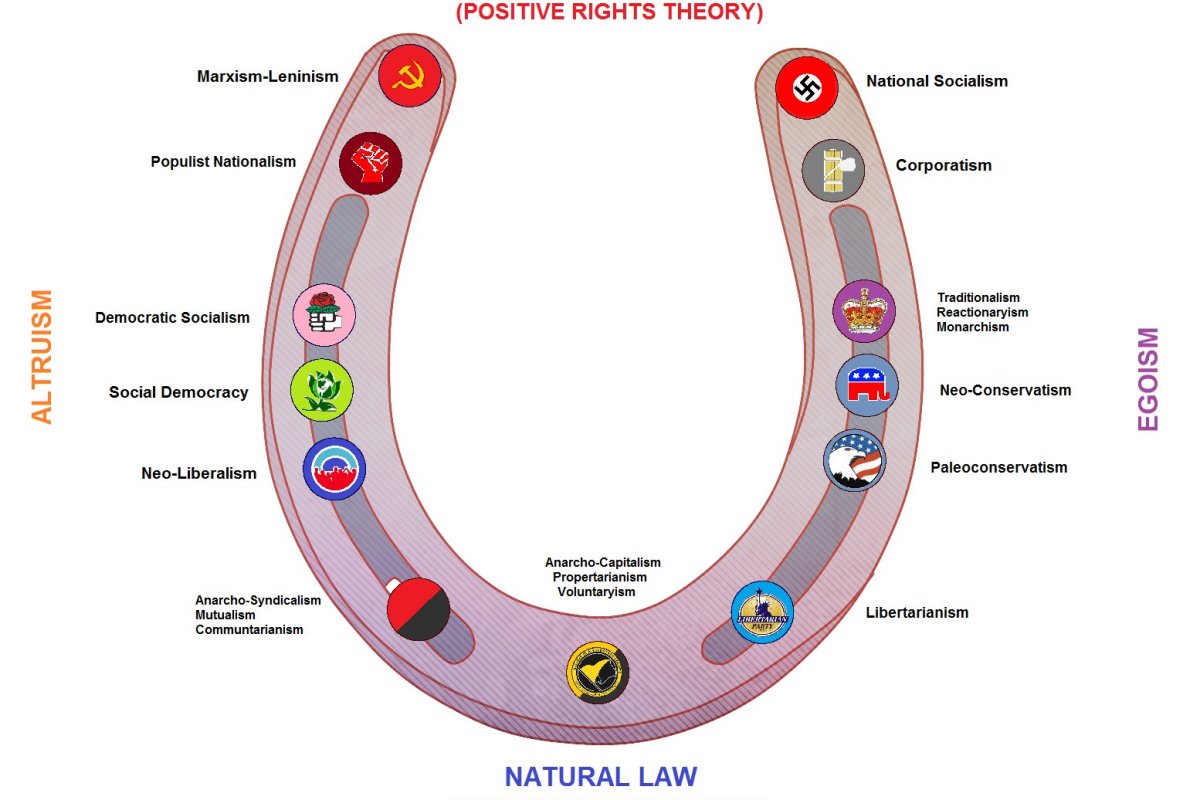

Political Spectrum

I am trying to avoid commenting on the recent SCOTUS decision and how it is symptomatic of how the United States remains a failed state—at least a zombie state—, so this preamble should suffice for now.

I was chatting politics into the wee hours with my son, who’s been on this earth for almost 25 years now. I consider myself to be on the left of traditional political scales. He considers himself to be on the right, but he’s trying to make sense of the scales and dimensions. He had two questions: First, ‘What are the crucial dimensions and positions that define left and right?’ Second, ‘Where do Liberals fit into the equation?’

Knowing me, he wanted to provide some context and confer with me his knowledge that would also serve to frame and anchor the conversation. A key point was to have clarified the adopted nomenclature and positioning on a theoretical map.

We started with the origins of the left-right distinction, which was barely a valid dichotomy even as it was coined in France. There was no duolith. Those on the left or right had features in common but taken holistically, this was a reductionist categorisation, as tends to happen. Exacerbating this, as it does today, still, the politicians with voices remained to the right of the unvoices masses.

He asked about the difference between freedom and liberty because his sources differentiate the two. Whilst connotation and nuance may enter the picture, etymologically speaking, freedom is a native English word whilst liberty is French via Latin. Connotatively, freedom is an absolute measure whilst liberty is granted within a political framework. Positive and negative liberties aside, liberty is an attenuator. It restricts freedom even if it allows most of the signal through. Effectively, liberty is permission by the state to act in certain ways.

By the end of the conversation, he was framing the key difference around notions of national identity and nationalism—I versus we. I shared my thoughts on the construction of identity, thus making for a poor foundation, though we both agreed that national narratives have been the impetus for much activity. (I am reluctant to insert the word progress here.)

After our conversation, I began researching dimensions established or otherwise proposed by political science. This led me to a place I found interesting—the distinction between radical, progressive, conservative, and reactionary positions. For some reason, this never really occurred to me.

I’m not sure one can employ these terms in general discussion without definition and qualification, but I feel they are useful in their own right. Typically, I view the political landscape—at the highest level and with a US-bent—as Left (communists, socialists, anarchists, progressives) and Right (conservatives, liberals, and fascists). I also know that this is imprecise, but maps always are.

This new vocabulary helps by distilling the map to this—ordered differently:

  • Right
    • Conservative
    • Reactionary
  • Left
    • Progressive
    • Radical

Conservative

Conservatives want to maintain the status quo. This is interesting usage adoption. Fundamentally, advocates of this view want to promote and to preserve traditional social institutions and practices. In Western culture, conservatives seek to preserve a range of institutions such as organized religion, parliamentary government, and property rights. Conservatives tend to favour institutions and practices that guarantee stability and evolved gradually. Adherents of conservatism often oppose progressivism and seek a return to traditional values

In Western culture, conservatives seek to preserve a range of institutions such as organized religion, parliamentary government, and property rights.

My first thoughts when I hear the term are a harkening back to the old ways—the Ozzie and Harriott mythos, white picket fences, Mom and apple pie. But this is different. Effectively, rather than reaching back, it wants to preserve the current moment in time. Where it gets more nebulous, I think, is that some people include nostalgia in the now. Duratively, perhaps a person might remember some aspect of their childhood. Though this has been lost by now, they imagine it as part of their identity. This can also extend further back as they wish some other historical aspects can be cherry-picked. Perhaps the white conservative wishes to be able to subjugate women as was the practice in the 1950s of America, but to not conserve high union participation and high marginal tax rates, as affronts to freedom (or whatever). This ends up being an exercise in selective memory and revisionist history-making.

This needs to be distinguished from a so-called traditional conservativism in the tradition of Burke or Hobbes, who want to conserve some sense of fundamental morality they feel derives from nature.

Reactionary

Reactionaries oppose whatever is in effect at the moment—the petulant toddler—but with a twist. Like the conservatives, there is a conservation effort but rather than a focus on the status quo, the focus is on status quo ante, which is a return to the old ways, tried and true.

Progressive

Progressives support social reform. Ostensibly, they don’t oppose tradition, but they feel that old structures need to be reimagined and reinterpreted in face of social and technological change. An underlying metanarrative is the notion of progress. I am not going to comment on progressivism generally and the nuances evident in the American flavour of it.

Radical

Radical politics denotes the intent to transform or replace the fundamental principles of a society or political system, often through social changestructural changerevolution or radical reform

During the 20th century, radical politicians took power in many countries across the world. Such radical leaders included Vladimir Lenin and Joseph Stalin in Russia, Mao Zedong in China, Adolf Hitler in Germany, as well as more mainstream radicals such as Ronald Reagan in the United States and Margaret Thatcher in the United Kingdom. Of course, Donald Trump is a more recent example in the United States.

Summary

To me, these terms operate on a gravity to now. Conservatives are heavily anchored in the familiar and seek stability. Then they see factors in the past that they imagine will also serve this purpose, so they wish to incorporate these and carry them forward. Conservatives are not unaware of the need for change, they just want to not create waves in the process.

Likewise, although placing a heavier weight on the past than even conservatives, reactionaries are not fundamentally opposed to retaining what is working currently. The term working is subjective and perspectival, so they may wish to retain something that works for them at the expense of others. This is a challenge for conservatism as well. Just because racial segregation seemed to work for an equivalent person in the past doesn’t mean it worked well for the excluded.

Like reactionaries, progressives aren’t afraid of keeping a foot in the present—and there may be plenty of lessons to learn from the past—, but they feel that given the change in the underlying terrain, some refactoring is in order.

And then there are the radicals. I suppose that radicals have different motivators, but in essence, they feel that the current implementation is substantially broken, and it needs more than a few small tweaks and a fresh coat of paint. These people are renovating rather than redecorating. They may even want to throw the baby out with the bath water. Some may wish to keep the baby.

As for me, I usually place myself in the Progressive camp, but under the definition, I am more of a radical. The system is broken. We don’t just need to delete it, we need to install a new one.

Thomas Jefferson said that the United States should rewrite the Constitution every 19 years. Why 19 years? Who knows? Given the intransigence in American politics, this would have been a disaster. And given the powers that be, the debate would be over which parts to conserve and which to progress. Being the cynic that I am, my guess is that it would devolve to worse than we have now.

DISCLAIMER: For the record, I don’t endorse the placement of the political ideologies on the horseshoe image, but I find it interesting and it grabbed my attention. I hope it grabbed yours, too.

Property, Tax

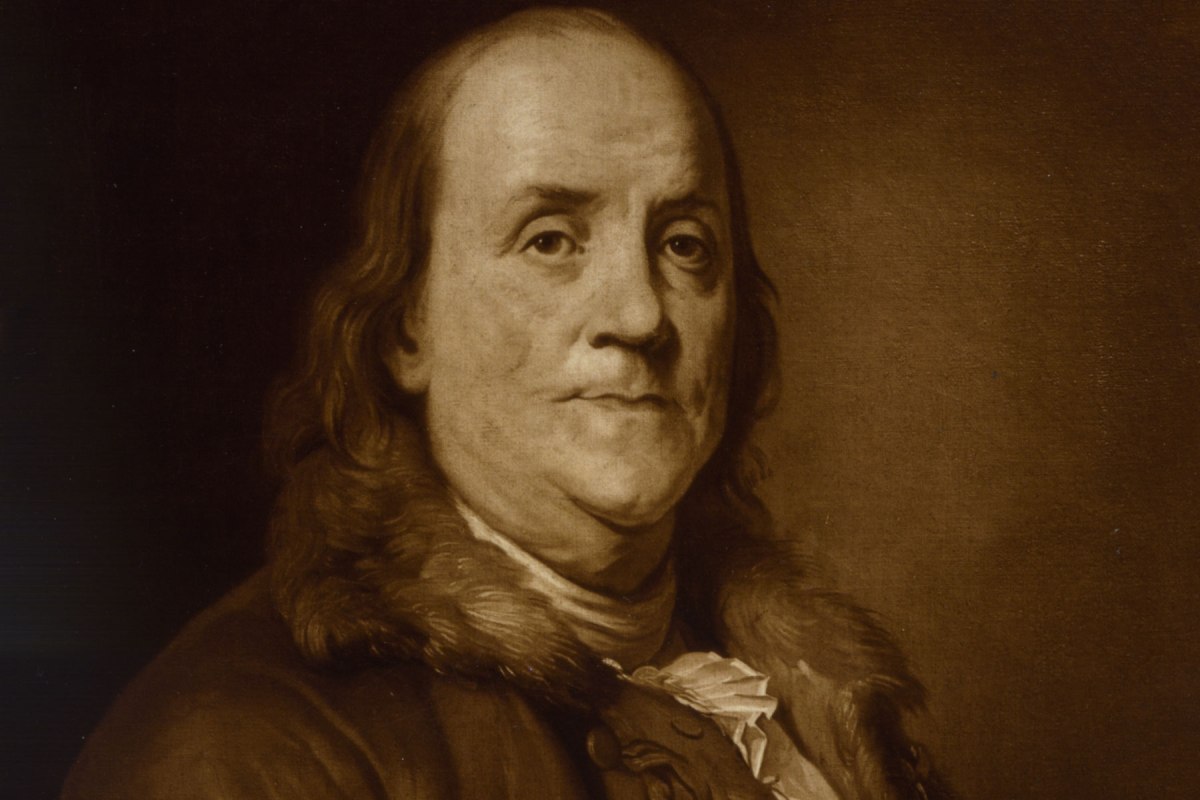
Interestingly, I started this blog exploring property, a concept that makes no sense to me, and continued on a Postmodern journey to discount rights and truth. And then Enlightenment thinking in and of itself. I think of these still, most recently turning onto the concept of Democracy. Whilst researching de Tocqueville, I happened upon this letter by Ben Franklin. What on? Property. And taxation.

Property

CHAPTER 16|Document 12

Benjamin Franklin to Robert Morris

25 Dec. 1783

Writings 9:138

The Remissness of our People in Paying Taxes is highly blameable;

the Unwillingness to pay them is still more so.

Benjamin Franklin

The Remissness of our People in Paying Taxes is highly blameable; the Unwillingness to pay them is still more so. I see, in some Resolutions of Town Meetings, a Remonstrance against giving Congress a Power to take, as they call it, the People’s Money out of their Pockets, tho’ only to pay the Interest and Principal of Debts duly contracted. They seem to mistake the Point. Money, justly due from the People, is their Creditors’ Money, and no longer the Money of the People, who, if they withold it, should be compell’d to pay by some Law.

Franklin calls out those citizens unwilling to contribute their fair share to the commonwealth.

Property superfluous to [the Conservation of the Individual and the Propagation of the Species] is the Property of the Publick

Benjamin Franklin

All Property, indeed, except the Savage’s temporary Cabin, his Bow, his Matchcoat, and other little Acquisitions, absolutely necessary for his Subsistence, seems to me to be the Creature of public Convention. Hence the Public has the Right of Regulating Descents, and all other Conveyances of Property, and even of limiting the Quantity and the Uses of it. All the Property that is necessary to a Man, for the Conservation of the Individual and the Propagation of the Species, is his natural Right, which none can justly deprive him of: But all Property superfluous to such purposes is the Property of the Publick, who, by their Laws, have created it, and who may therefore by other Laws dispose of it, whenever the Welfare of the Publick shall demand such Disposition. He that does not like civil Society on these Terms, let him retire and live among Savages. He can have no right to the benefits of Society, who will not pay his Club towards the Support of it.

Franklin is supportive of Locke’s property of ‘life, liberty, and property’ fame, but he is decidedly not a fan of passing along excess generational wealth. In fact, he feels that such excess property should accrue to the public.

To those unwilling to play by these rules, banishment to the wolves is not too good for them. Stripping them of citizenship is not too harsh a punishment.

He that does not like civil Society on these Terms, let him retire and live among Savages

Benjamin Franklin


The Founders’ Constitution
Volume 1, Chapter 16, Document 12
http://press-pubs.uchicago.edu/founders/documents/v1ch16s12.html
The University of Chicago Press

The Writings of Benjamin Franklin. Edited by Albert Henry Smyth. 10 vols. New York: Macmillan Co., 1905–7.

Easy to print version.