Slotrocket

Being in a band is hard. It’s like being married to a bunch of partners, and if you are a band and not just some cat with some supporting characters, you’ve got artistic differences to consider. This is where I soured on direct democracy.

Slotrocket is the name of one of the bands I performed with. We played under this name exactly once, but let’s rewind to the democracy bits.

Skipping a lot of the details, I played bass in this line-up. It was a 3-piece with a focus on alt-post-grunge-nu-metal, but we all came from different places musically. The drummer came from speed metal, death metal, and maths rock. The guitarist-vocalist came from Classic Rock, Grunge and Nu-Metal. I came from all sorts of places, but I wanted to focus this project on the post-grunge thing. For the uninitiated, this is the likes of Seether, Three Days Grace, Breaking Benjamin and so on.

We didn’t have a name. Since we only played with friends and at parties and sometimes provided the backing for live karaoke, it was just us. We did arrive at the name of Breached, but it turned out that a Canadian band was already calling dibs on that, so we just let it slide—especially when they released an EP in the vein of early Incubus.

But then the guitarist-vocalist didn’t want to hold both roles. Too much effort. He didn’t care which. In the end, they found a female singer who was interested. It seems that there was a mixup in communication. They asked if I minded if she joined us during our next rehearsal. I figured it was just another live karaoke session, so when I said yes, it turns out that she was now a member of the band. Truth be told, I didn’t think a female would cop the vibe I was seeking. She was no Lacy Sturm or Amy Lee. She didn’t know any grunge material as she was more of a Country gal. But that’s not the story.

The story is the name. We deliberated for well over a month to settle on a name. We decided to create a spreadsheet. We’d all force rank the entries. And each of us had infinite veto votes to kill an offending entry from the list.

Skipping ahead a few chapters, I liked Rapeseed. It was a benign word that sounded edgy. The boys were fine with it. Notsomuch, the girl. There was no particular rush until we booked a gig—the gig. We’d need a name to promote.

I came up with Slotrocket. Again the boys were fine with it; her notsomuch. However, she didn’t veto—later claiming that she didn’t think we could possibly be serious. Since I booked the date and created the adverts, everything seemed to go under the radar—or under the rug.

A bit before the show, I was distributing material and advertising on our media outlets (as it were) and she caught a glimpse of the promo mats. Let’s just say that she was not amused. Still, when the time came, we performed.

OK, so I skipped over some stuff—the months of pouring over a spreadsheet. Our goal was unanimity. The name didn’t have to be everyone’s top pick, but we did need to attain a consensus view. As it happened, two of the biggest decisions came about by accident, and they both resulted in hard feelings.

It’s not that the 3 or 4 of us couldn’t have eventually come to a unanimous decision amounting to all of our first choices, but this would have taken time—and who knows how much.

One may feel justified accusing me of allowing perfection to be the enemy of the good, but that’s just something apologists tend to say, as they defend their preference for democracy.
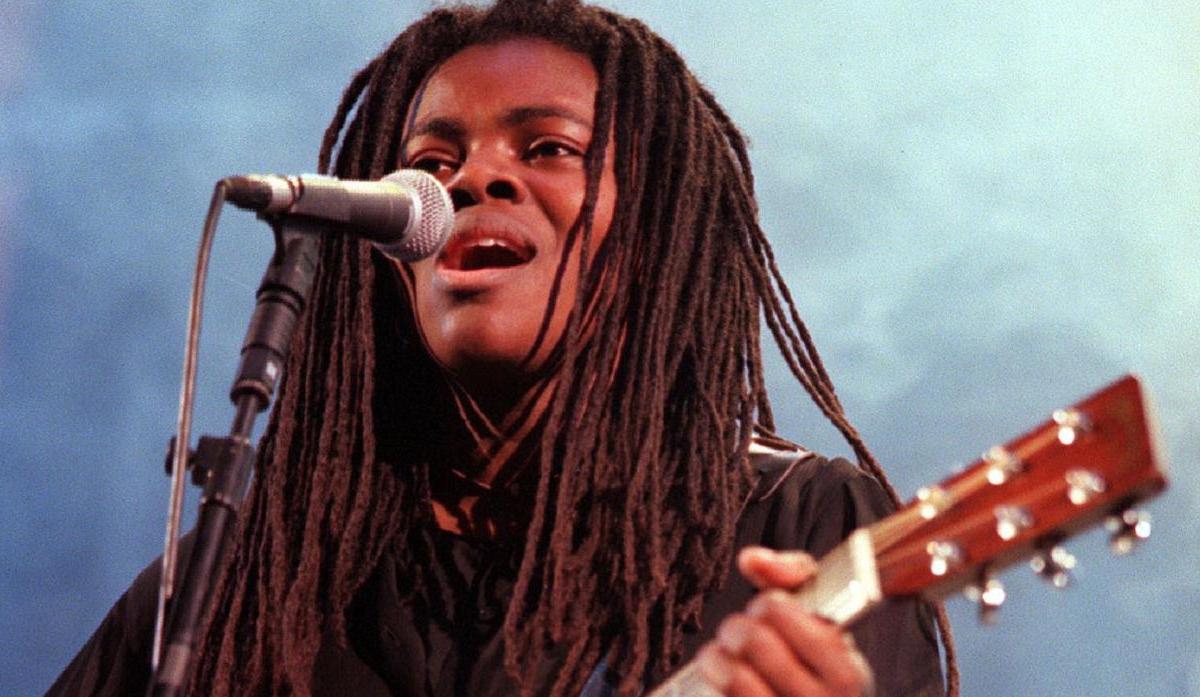

Fast Car

I enjoy listening to music reaction videos on YouTube. The other day, I came across Tracy Chapman’s Fast Car. I’ve loved this song since it first came out. Musically, it’s a simple repetitive chord progression—finger-picked D, A, F#m, E. In a manner, repetition is a metaphor for the lyrical narrative. In this live performance version, the treatment is more simplified than the original album version—until the last bar.

Tracy Chapman – Fast Car

The protagonist is in a place where any place is better, and she’s got a fast car she can use to get away. The situation she finds herself in is a family relationship where alcoholism is a problem; her father is an alcoholic. Her old man’s got a problem. He lives with the bottle, that’s the way it is. But she’s got a friend, and she’s got hope. She tells her friend, ‘maybe we make a deal. Maybe together we can get somewhere. They are starting from zero and have got nothing to lose. They can follow her ‘plan to get us out of here‘.

And so she left to create a new life, but in this new place, she recreated her prior experience with her friend proxying her father. Like her dad, she loved her friend, but she knew that the relationship wouldn’t work out.

And so she left to create a new life. Rather, she remains in place and asks her friend to make a decision, to take a fast car and keep on driving, to leave tonight or live and die this way.

Perhaps this new life would be better without the remnant from the previous life. Did she learn from her experience, or would she seek the same type of partner? Would she fall into the same pattern because it was her comfort zone? The song doesn’t tell us, but the underlying music hasn’t changed. It’s easy to imagine the next verse to be the same as the first—although one could argue that it does end on the G, not repeating the Em and D they run out the phrase. That’s for you to decide.

Returning to the song, there is the chorus. She’s retelling this story. She’s looking back—remembering. She had wanted to belong. She wanted to be something. In the end, we don’t know where she ended up. It seems to me that she’s in a place where she can reflect. Perhaps it’s the calm before the storm, or perhaps this challenge has been resolved, and the chain has been broken. Perhaps, that’s the effect of the added notes in the final bars.

A powerful song.

Feeling Music

Back in the day when I was a startving artist, as it were, and a bit of a studio rat, we didn’t always have budgets for top studio musicians, so we had to improvise… and by ‘improvise’, I mean get music students from USC or UCLA to play parts on instruments the bands weren’t proficient at. We could transcribe an arrangement and notate how we wanted it to be played. Notating feel is somewhat possible but not practical.

Typically, we’d secure trained Classical musicians, but the struggle was real to get them to ‘feel’ and not just read the notes on the page. For us, we just ‘felt’ it. We’d find a pocket, find a groove, not care that the tempo might drift or the spacing wasn’t quite in cadence, but getting these trained musicians to get past, ‘but that’s not what you wrote’ was hard. The playing was technically correct, but it was often wooden.

In the day—this is the early to mid ’80s—, synths were not quite ready for prime time when it came to simulating acoustic instruments, 8-bit samplers were shite and 16-bit samplers were out of our price range—and still not quite ready for prime time either. So that was the trade off.

Typically, the best case scenario was to play the parts on a synth for the players armed with sheet music, but that was never as good as when we had a feeling instrumentalist make an appearance.