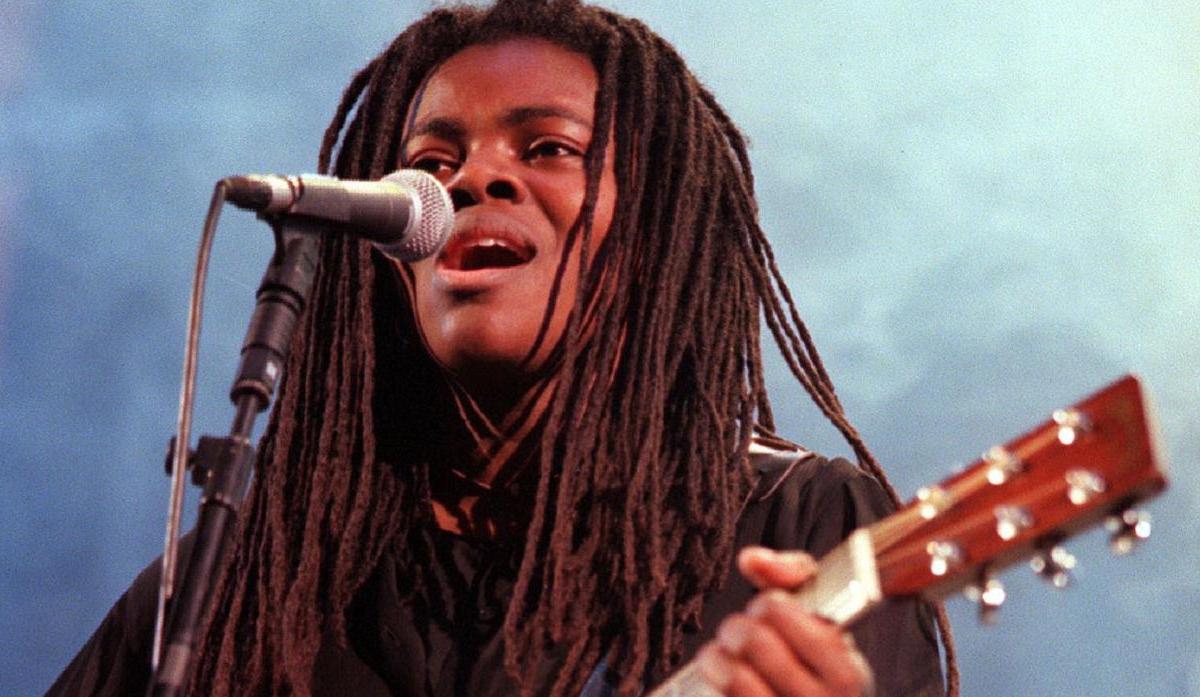
I enjoy listening to music reaction videos on YouTube. The other day, I came across Tracy Chapman’s Fast Car. I’ve loved this song since it first came out. Musically, it’s a simple repetitive chord progression—finger-picked D, A, F#m, E. In a manner, repetition is a metaphor for the lyrical narrative. In this live performance version, the treatment is more simplified than the original album version—until the last bar.
The protagonist is in a place where any place is better, and she’s got a fast car she can use to get away. The situation she finds herself in is a family relationship where alcoholism is a problem; her father is an alcoholic. Her old man’s got a problem. He lives with the bottle, that’s the way it is. But she’s got a friend, and she’s got hope. She tells her friend, ‘maybe we make a deal. Maybe together we can get somewhere. They are starting from zero and have got nothing to lose. They can follow her ‘plan to get us out of here‘.
And so she left to create a new life, but in this new place, she recreated her prior experience with her friend proxying her father. Like her dad, she loved her friend, but she knew that the relationship wouldn’t work out.
And so she left to create a new life. Rather, she remains in place and asks her friend to make a decision, to take a fast car and keep on driving, to leave tonight or live and die this way.
Perhaps this new life would be better without the remnant from the previous life. Did she learn from her experience, or would she seek the same type of partner? Would she fall into the same pattern because it was her comfort zone? The song doesn’t tell us, but the underlying music hasn’t changed. It’s easy to imagine the next verse to be the same as the first—although one could argue that it does end on the G, not repeating the Em and D they run out the phrase. That’s for you to decide.
Returning to the song, there is the chorus. She’s retelling this story. She’s looking back—remembering. She had wanted to belong. She wanted to be something. In the end, we don’t know where she ended up. It seems to me that she’s in a place where she can reflect. Perhaps it’s the calm before the storm, or perhaps this challenge has been resolved, and the chain has been broken. Perhaps, that’s the effect of the added notes in the final bars.
A powerful song.

 Philosophics