There Are No Accidents

There are no accidents, or so claimed Carl Jung in his work on synchronicity, positing that events may be connected causally or by meaning. Some people see this as the work of some karmic force whilst others use it to suggest that a person is being passive-aggressive.

Karma

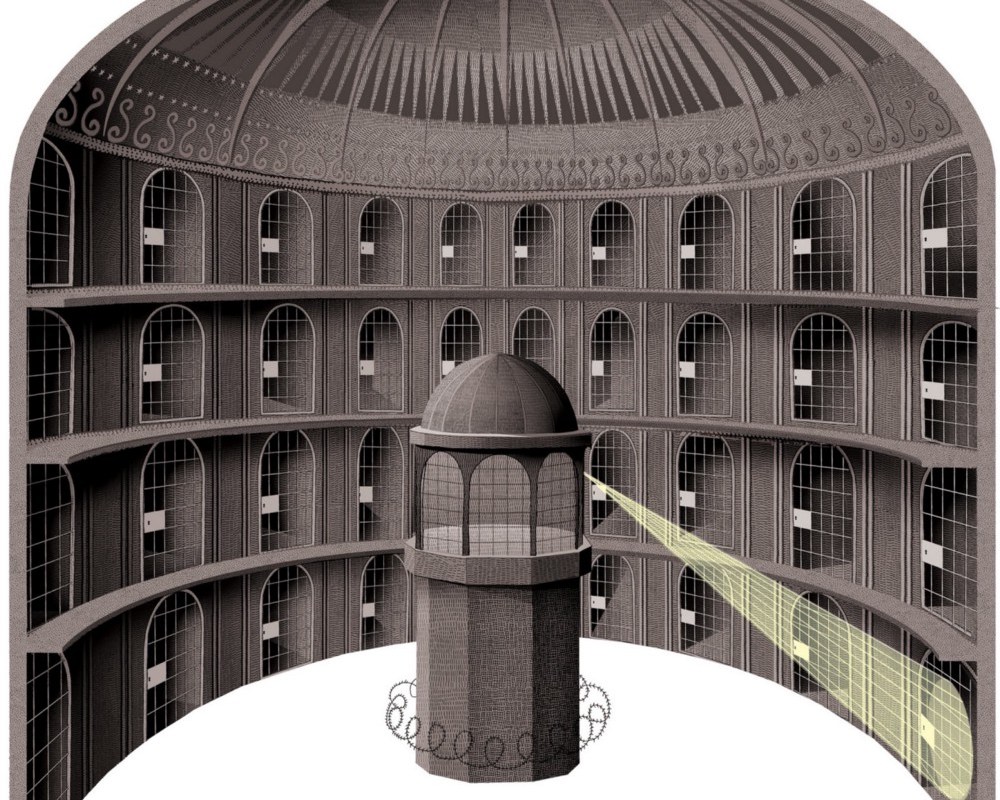
In the karmic sense, this means that there is no escaping fate, and, as with Santa Claus, he is constantly watching you, like some personified panopticon. See the short post on karma, too.

I’m not sure if the bible story of Judas and Jesus is really a karmic anecdote, but under this paradigm, everything is a no-fault situation. Judas was fated to betray Jesus. And despite this lack of responsibility, Judas still committed suicide once he realised what he had done and despite it not being an accident.

Passive-Aggression

In the passive-aggressive sense, it is to say the event A may be caused by something in person B’s unconscious mind—and not by some collective consciousness or a Universal Overseer. So, secretly, if Person B accidentally backed into your parked car, it may not be by some conscious volition; rather, it’s because or some deep-seated anger or other ill-will harboured and directed for you.

The problem is that if you accept that there are no accidents, then you—intentionally or otherwise—parked your car in a place where it would necessarily be hit by someone—by anyone. It just happened to be this other person for whom there are also no accidents. So, both parties are blameless. But people love to blame, and they like to defer responsibility.

Verdict

The bottom line is that both of these concepts are a bit sketchy. In a world of no free will, the karma situation might be plausible, but this wreaks havoc on moral-ethical systems. I discuss that in most post on karma.


…and Justice for All

1–2 minutes

I’ve been out of sorts as of late, too busy to be contributing to this blog. Abstract philosophy, as Geuss notes, is a field for the comfortably idle. I’ve been in the midst of a divorce, and it’s not that I don’t think about the abstract, but my focus is pulled toward the mundane. The US court system comes to mind. I’ve already served on several juries, so I understand how pathetically that side is structured; I’ve been of the claimant/petitioner side and the defence side, and now I am a respondent. I’ve never been an attorney or barrister, nor have I been a judge, but I’ve known some of each, and it’s really a blind faith they have in the system—as well as a paycheque (let’s be honest here)—that keeps them going. As Upton Sinclair once noted, ‘It is difficult to get a man to understand something when his salary depends upon his not understanding it’. Between this and escalating commitment, this poor excuse for a system is going nowhere fast.

“It is difficult to get a man to understand something when his salary depends upon his not understanding it.” — Upton Sinclair

I don’t even believe there is such thing as Justice, let alone some ability to systematise it. As I mentioned in my last post, the system is constructed to prioritise consistency over outcome and favour deontology over consequentialism with just a smidgen of virtue ethics for good measure, but it’s all still just smoke…… and mirrors. It’s theatre—procedure for procedure’s sake. I guess that Foucault may have been right about the Power bit, but there’s more nuance than that.

Meantime, I am trapped in this flawed system trying to navigate between Scylla and Charybdis. If I’m not out by the end of the month, come in to rescue me.

—Decidedly not a fan.

Deposition Despotism

Well, ya. Sure the title has little to do with this post, but I had to sit for a deposition this past week, and like they do on TV, I had to raise my right hand and swear to tell “the whole truth, nothing but the truth, so help you, God.”

Do you swear to tell the whole truth, nothing but the truth, so help you God?

So, as a moral subjectivist, who is also a pragmatist, I thought that it would not be in my best interest to raise the point that I don’t ascribe to their notion of truth, certainly not a God-given truth, and does raising my right hand act like an antenna, perhaps like rabbit ears on the old TVs from the 1960s? And does this ritual work without a bible?

Of course, I understand the notion of this ritual, and so I agreed, but it really drove home to me how the jurisprudence system in the US (and I am sure elsewhere) is just a smoke & mirrors act—some futile deontological exercise.

At some time during the proceedings, an attorney felt obligated to query as to whether I understood what perjury is before reading the statute. I am guessing that this was more of a psychological endeavour meant either to throw off my balance or was in line with the studies where observed students were less apt to cheat on an exam when they had recently signed a statement acknowledging the (fake) anti-cheating clause. Some people are so easily manipulated through indoctrination.

At one point, I was asked if I was taking the process seriously. I acknowledged that I didn’t really, but that he could continue. I am not sure how much was theatrics attempting to throw me off balance, but I think I passed the audition.

On Property

2–3 minutes

We take property for granted. John Locke espoused life, liberty, and property. Rousseau observed that “The first man who, having fenced in a piece of land, said “This is mine”, and found people naïve enough to believe him, that man was the true founder of civil society. From how many crimes, wars, and murders, from how many horrors and misfortunes might not any one have saved mankind, by pulling up the stakes, or filling up the ditch, and crying to his fellows: Beware of listening to this impostor; you are undone if you once forget that the fruits of the earth belong to us all, and the earth itself to nobody.”

The first man who, having fenced in a piece of land, said “This is mine,” and found people naïve enough to believe him, that man was the true founder of civil society.

But property and its defence is nothing more than some accepted rhetoric. Libertarians presume this to be some inviolable right, and Anarchists and Socialists believe that property—well, private property anyway; real property—is a common good.

I have an issue with ownership of real property, though I don’t have such a strong opinion on possession. In reality, this is more of a practical matter than a defensible philosophical position. It has emotivist roots. As Hobbes noted (or I’ll paraphrase liberally), even animals in his state of nature have possessions, but there is no right to these possessions (which belong to the monarch anyway in society); there is only the ability to try to retain ownership through force.

In practice, this is what society does. Insomuch as the force is more potential than kinetic, allowing the state or community to exercise this force by proxy, it is not dissimilar to our consumption of meat products at arm’s length by sheltering the violent reality by intermediary grocers.

And we shelter ourselves through language. We don’t eat cows and pigs, we eat beef and pork, chateaubriand and bacon.

Returning to property, real property, it’s yours as long as you possess it, but it is not yours from a distance, and it’s not yours to bequeath. If we are to embrace capitalism—which I don’t, but for the sake of argument—, we should allow the property to go to the purpose that will provide the greatest utility. History as a judge demonstrates that it is unlikely to happen to be the someone’s heirs.

Good Riddance 2017

I can’t wait for 2018 to rear its ugly head.

Entering 2017, my primary interest was the validity of property rights. This devolved into an enquiry on rights more generally and then moved out of the realm of political philosophy into the domain of philosophy.

On the journey, I decided to self-identify as a subjectivist, entrenching from a mere relativistic position. This led me into the sphere of normative ethics, bringing me back into the realm of political philosophy. I realise that at some level we need a pragmatic philosophy to operate as a society—presuming that one feels that society is a desirable goal. It is for me. But I feel that the normative moral offerings are all weak tea.


freeimage-1455164-web
Weak Tea


I also realise that I think (read: process information) like a (stereotypical) female, thinking in terms of relationships rather the more male dominant deontology. Where my female accord differs is that I don’t buy whole hog into the Consequentialistic worldview.  Also, I haven’t experienced reality from a female point of view. Vive la difference.

So what’s up for 2018?

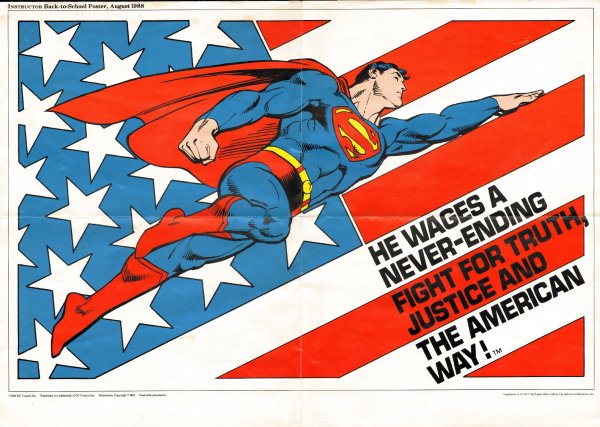
For now, I am going to continue to try to make sense of political philosophical positions. At the moment, I am pretty much a social constructivist, so I’ll see where this leads. Post-modernists (or post-structuralists, if you prefer) are under fire these days and have been for a while now. It’s not that I don’t understand or sympathise with the position of people who buy into thinking that we need to accept some normative morality. In fact, I have sympathised with Nietzsche’s quandary from the getgo.  I just don’t believe that a political worldview can be structured on a single tenet, whether God or country—Truth, Justice, and the American Way.

For_truth,_justice_and_the_American_way!!!!

On the topic of identity, I’ve always wondered how Superman decided to view himself as American. I also wonder if he is referring to the United States of America or of the larger continents. Given the backlash over immigrants and aliens, I have to wonder how nationalists react to this interloper.

Anyway, I am going to research other post-modernist thinkers as well as to continue to learn about the Classical thinkers—even though I seem to reject out of hand most of the ideas of most of them. The common thread seems to be the wishful thinking involved, whether the gods and goddesses thing or the pretence of some single (or at least tightly contained, small, finite set of) underlying and discoverable truths.

Until next time, I’ll see you on the other side…

Looking back at books & such in 2017

Evidently, I ‘read’ a lot in 2017. To be perfectly honest, I listened to a lot of long-form audiobooks in 2017. Here is a summary of my favourites. The ♠ symbol indicates that I read rather than listened to the audiobook version.

  • Recommended Favourites
    1. Homo Deus: A Brief History of Tomorrow by Yuval Noah Harari
      This is a strong follow-on to his Sapiens: A Brief History of Humankind. He assesses the present and extrapolates from the past to formulate a vision of the future.
    2. Thinking in Systems: A Primer by Donella Meadows
      ♠ Whilst not philosophical, per se, this is a reminder of how much of what we analyse is based on systems and how poorly humans process complexity.
    3. What Is Property? by Pierre-Joseph Proudhon
      ♠ I could have captured this under Classics, but Favourites rates higher. Proudhon does a bang-up job of critiquing private property, especially as rentier. Some have espoused stronger views, but he was a trailblazer and a trendsetter.
    4. Good Strategy Bad Strategy by Richard Rumelt
      Another non-philosophy book, this was more supportive of my rent-paying day job. He does a good job of defining strategy and explaining how poor most executives are at it—despite how many have done MBA-level coursework in Strategy at top-tier schools.
    5. Lolita by Vladimir Nabokov
      One of the few fiction pieces I read this year, I am not sure if I’ve read a better book. Whilst it’s difficult to judge over an expanse of years and decades—given falible memory and circumstances—, it’s got to be one of the top two or three.
    6.  Neo-Nihilism: The Philosophy of Power by Peter Sjöstedt-H
      Although this work is entirely derivative, it is presented as a compact summary, and I enjoyed it on a plane trip from someplace to somewhere.
    7. Our Magnificent Bastard Tongue by John McWhorter
      Full disclosure: I’ve been a McWhorter fanboy for years, but again I enjoyed his perspective on language and linguistics.
    8. The Blank Slate: The Modern Denial of Human Nature by Steven Pinker
      I like Pinker’s presentation style, though I am not quite on board with his defence of Humanism and neo-Enlightenment position. These aside, his analysis resonates once I compensate for the bias they introduce. I read this after having read Robert Wright’s The Moral Animal, which trod some of the same ground. I recommend it, too; I just found Pinker’s presentment to be superior.
    9. Philosophy and Real Politics by Raymond Geuss
      ♠ This came as a recommendation as result of an online conversation in a Libertarian forum. I listened to it as an audiobook and the read it to fully grasp the material. It was well worth it.
  • Classics
    1. Discourse on the Origin of Inequality by Jean Jacques Rousseau
      I enjoyed this quite a bit, and though it’s viewed through quite the quaint Romantic lens, it is nonetheless enjoyable. I was strongly considering this as a favourite, but I opted to place it at the top of the Classics list.
    2. The Social Contract by Jean Jacques Rousseau
      Although I appreciate Rousseau as a thinker and writer, I didn’t really like this. It was a decent thought experiment in its day, but in the end, it’s just a Romantic and fanciful sort of origin story.
    3. Beyond Good and Evil by Friedrich Nietzsche
      I also considered placing this in Favourites. Nietzsche or his translator provide coherent exposition, but in the end, I found it to be spotty. Though many find it to be a hard pill to swallow, his extension of Hegel’s master and slave (herd) morality still resonates today.
    4. On the Genealogy of Morals: A Polemic by Friedrich Nietzsche
      A strong follow-on to Nietzsche’s Beyond Good and Evil, though not quite a favourite. Nietzsche is a master rhetorician, and this polemic is quite enticing. What struck me most is how he presaged Freud by at least a decade.
    5. An Enquiry Concerning Human Understanding by David Hume
      ♠ I actually read rather than listened to this classic. Hume, the Empiricist, was so far ahead of his time.
    6. Anarchy, State, and Utopia by Robert Nozick
      More of a modern classic—whatever that means—, Nozick tries, but the entire idea is based on a faulty premise and wishful thinking. I understand he walked back some of his position in his later years (of which there weren’t many), but he never quite jumped off the Libertarian bandwagon.
    7. On Liberty and Utilitarianism by John Stuart Mill were refreshing, as I mention here. Whilst I don’t agree with his consequentialism, I appreciate what he has to say. Ultimately, he demonstrates what is wrong with empiricism. Still, definitely worth the read.
    8. The Republic by Plato
      I found this book to be sophomoric and lame logic. I truly don’t understand how this tripe is revered. It’s like listening to some random dude tripping balls at a party. It’s saving grace is his Allegory of the Cave, but I could have read that on the back of a cereal box. I didn’t need it to be buried in a book.
    9. The Protestant Ethic and the Spirit of Capitalism by Max Weber
      Not a favourite in the least. Probably the least interesting book I read in 2017. If I read a worse book, I mercifully put it aside and didn’t slog through it. Let’s just say I read this. Check that box. This was the epitome of boring. I almost quit, but as it was relatively short, I persevered. Weber’s main point of how Calvinism created the environment to allow Capitalism to flourish, could have been presented as a pamphlet. I was not interested in the deep historical perspective. YMMV
  • Great Courses
    In addition to reading and listening to the books above, I enjoyed several courses, which I recommend highly and I’d be remiss not to mention. Follow the links to read about them. 

    1. The Modern Intellectual Tradition: From Descartes to Derrida (publisher)
    2. No Excuses: Existentialism and the Meaning of Life  (publisher)


Spheres of Justice

2–3 minutes

I’ve recently happened upon Michael Walzer, and it turns out I agree with much of what he has written about in the realm of political philosophy. Although he published, Spheres of Justice in 1983, he may be more famous for Just and Unjust Wars: A Moral Argument With Historical Illustrations. I am more interested in the former, and this work integrates well with Benedict Anderson‘s Imagined Communities.

In the realm of philosophy, it’s no mystery to those who know me that I am a Subjectivist, but I still need to operate in this physical socio-political domain, which is what attracts me to political philosophy.

I like to make an analogy relative to religious belief. Philosophically, I consider myself to be an igtheist, which is to say that I don’t really care about god or gods or ‘the universe’ or some metaphysical superpower in the abstract, but practically speaking, I am an atheist. The reason being that the non-existence of gods is irrelevant in a world where people behave as if there is one and create moral positions and form legal systems based on this premise, thus infecting these systems, so one needs to be an active atheist in order to disinfect the systems and extricate religion from it. Without getting too far off track, I am not saying that religious belief has had no benefit to ‘human progress’, but the price we pay is too high. The cost-benefit calculus is not favourable.

Walzer and Anderson both understand the constructed nature of political identity, whether self, family, community, state, nation, all of humanity, or beyond. It’s all relative. Some modern political philosophers like Rawls and Nozick try to rise above the inherent relativity in this constructionist view, but after all the trying, their attempts are weak tea, as their solutions are also constructed.

In the end, politics and perhaps all of perceived reality are social constructs, whose major survival mechanism is rhetoric. The more convincing the argument, the better. In fact, the reason I have adopted this worldview is only that the rhetorical narrative resonates with me better than some other. Ditto if you concur, and ditto if another narrative resonates for you, whether Christianity, Pastafarian, a starchild, or a nihilist.

battleOfTheBean[1]

Given this, it makes me wonder how other people choose the rhetoric they have rather than my (obviously superior) version.

quote-i-am-by-far-your-superior-but-my-notorious-modesty-prevents-me-from-saying-so-erik-satie-49-63-66[1]

EDIT: After I wrote this, I happened upon a short(ish) video promoting veganism and commenting on the construction of culture, so I am adding it. James Wildman


Life Lessons from Battle Royale

I’ve played some multiplayer games in my lifetime, and there are lessons of fairness to be learnt. In these games—whether PUBG or World of Warcraft, there are competitive and cooperative elements. Some have in-game economies and others ex-game versions. The common theme is acceptance of the concept that one cannot simply purchase a win or even a winning character. The game is won with a combination of skill and luck—good old-fashioned RNG. Except at the margin, wealth is insignificant, and there is little dynastic benefit, which is to say one can’t inherit a better toon bequeathed by some other.

 “Socialism never took root in America because the poor see themselves not as an exploited proletariat but as temporarily embarrassed millionaires.”

In gaming, we recognise this to be unfair. Taking more classic games as examples, we would not find it acceptable for one player to start a chess game with additional pieces or to start a Monopoly game with hotels already in place.

In real life, many* don’t feel that this inbuilt advantage is somehow unfair. In fact, it’s desirable. Let alone that most—which is to say 90-plus-odd-percent of them—will never be in a position to give or receive this advantage. This is where Rawlsian logic comes into play. Under the veil of ignorance, the vast majority of humans would not choose this system.

Unfortunately, whilst people may not live under a veil of ignorance—at least not in the manner presumed by the thought experiment—, they also under a veil of delusion, living as if by the misattributed John Steinbeck quote that people somehow view themselves as temporarily embarrassed millionaires.

To be sure, as Michael Walzer noted, there are many places where market-based economics are appropriate, but it would be good to remember that there are many places where it’s not.


* By many, I mean to call out Libertarians, who have no issue with persisting wealth across generations. They apparently have a belief that (1) wealth can be earned, and one earned, (2) it can be carried forward into perpetuity—even if the subsequent wealth holder only acquires it through association, as with inheritance.

Why it’s so difficult to unify modern politics

“The organization we call modern republicanism is based on multiple values and principles that conflict. We can identify at least five basic values of most modern republican political theories:

  1. popular self-governance by the political community
  2. individual liberties from government and social interference
  3. equality
  4. communal or national preservation, and
  5. economic and material modernization

“All of these matter; none can be ignored. But these values conflict. If you consistently emphasise or choose one over the other or pull on that thread, you move toward an exclusive political view of one kind or another.

“For example, if you emphasise self-governance over all other values and are willing to trade the others for more of it, you become a civic republican or a populist or a participatory democrat.

“If it’s individual liberties and rights, you value above everything else, a Libertarian, a neo-liberal, or a Natural Rights theorist.

“If it’s social equality, you become a progressive or social democrat or even a socialist.

“If it’s material progress above all, then you are probably an ethical utilitarian, believing the politic’s aim is to enhance general happiness.

“If it’s preservation of the forms of community life, then you’re a conservative.”

This is excerpted from the first chapter an excellent Great Courses lecture series by Lawrence Cahoon, The Modern Political Tradition: Hobbes to Habermas. (This PDF course guide provides a summary view.) It’s an interesting dimensionalisation of the problem with trying to reconcile politics into some unified theory, as it becomes necessary to optimise across these dimensions, some of which are polar opposites to other goals in a zero-sum relationship.

This series is available on Amazon as well as at Audible at good prices.