Have you ever discovered something you already knew – rediscovered? I did.
I am familiar with the notion of prompting AI to explain something like a 10-year-old. But I’ve never seriously tried it.
I am wrapping up my next book, The Architecture of Ontology, and I realise it is incredibly dense. I’ve been listening to the audio renders I created with Elevenlabs. Parts of it are dense philosophical jargon, and other parts flow more readily. Today, I fed it to several AIs and asked them to explain the chapter contents as if to a 10-year-old.
NB: This is not a serious comparison. I am just sharing a bit of my experience with these ten LLM models.
Gemini
I’ve spent so much time with Claude and ChatGPT that I decided to begin with Gemini. I was pleasantly surprised. It not only simplified the language but also created different examples more suited to a younger reader. In fact, I considered a companion edition as I recall having read Howard Zinn’s People’s History of the United States and then encountering a Young People‘s version, which I bought for my then-teenage son. I’m not sure if I will, but the experience was inspiring.
I had Gemini interpret each of the 12 chapters, as well as a high-level version of the entire manuscript. Here is a piece of the first Chapter.
The Three Ingredients of Every “Meeting”
- The Filter (Mediation): Everything you see, hear, or think is filtered through your body and your brain. You see a tree because your eyes work a certain way; a bat would “see” the same tree differently using sound. You can’t take the filter off, because without it, you wouldn’t experience anything at all.
- The Push-Back (Constraint): The world isn’t just whatever you imagine. If you try to walk through a wall, the wall says “no”. This “no” or “push-back” is real, but it only happens during the meeting. It’s the part of the meeting that you can’t change just by wishing it was different.
- The Way it Looks (Presentational Structure): This is just the “pattern” or “shape” the meeting takes when the filter and the push-back come together.
DeepSeek
Why not compare? I asked myself. I meant to share with Grok, but I fed DeepSeek instead. Deepseek had less of a childlike quality than Gemini had, but it created suitable examples – LEGOs were its instrument.
The responses were for a younger crowd. Useful, but they felt a bit patronising.
As I re-read it, it rather used kids as characters and simplified the language, but it wasn’t immersive in the manner of Gemini’s response.
Chapter 1: The Meeting Moment
Imagine there’s a big argument going on between two kids.
- One kid, named Realism, says: “The playground is real! It’s made of wood and metal, and it’s there even when no one is playing on it.”
- The other kid, named Idealism, says: “No way! The playground is just our experience of it. It only exists because we can see it, touch it, and play on it.”
They argue all day, but neither can win. This book says they’re arguing about the wrong thing.
Grok
I have to admit Grok got a little carried away, as evidenced by its preface;
Chapter 1 Deep Dive – Like Explaining It to Your Super-Smart 10-Year-Old Best Friend (With extra fun examples, playground stories, and zero boring words!)
No, not just a 10-year-old, but a super-smart one at that. I don’t know, but I think this might defeat the purpose. ‘You didn’t say it couldn’t be a savant’, I can imagine him defending. Technically, true, I suppose, but not practically consoling.
I suspect DeepSeek and Grok are sharing notes. They both opted for a LEGO motif. Grok, though, is patently verbose. Although it is targeted for a child, it isn’t as abridged as the others. This is neither good nor bad, but it’s a thing.
As Grok is talking to a bright child, I still wonder if that child could decode this?
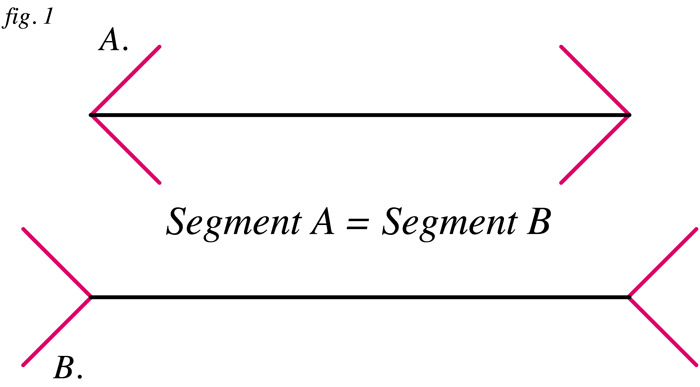
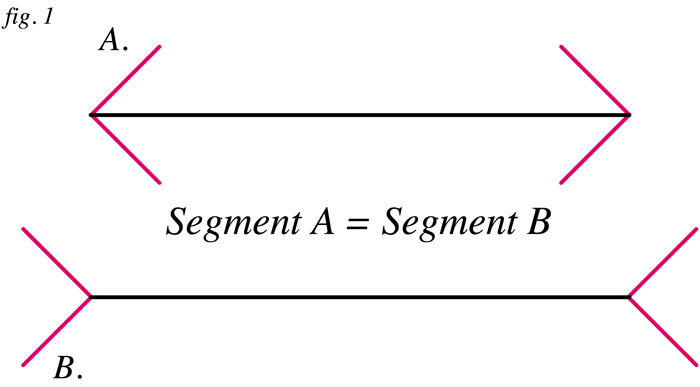
The weird optical illusion (Müller-Lyer lines) tricks your eyes even when you know it’s fake.
Perhaps an illustration would have helped. Perhaps I should place an illustration, though my adult version provides a description.
Perhaps I am out of touch, but this seems more suitable for a 14- or 16-year-old.
NB: I was going to stop at the three above, but I decided to keep going.
Mistral
Mistral started out OK, but instead of breaking down my technical jargon, it created more of a glossary of them and then defined them in simpler terms. That doesn’t really feel like it works as well as I’d like. Gemini is still the champ in this game.
Sure! Let’s break down Chapter 1 in more detail, but still in a way that a child can understand.
Chapter 1: Mediated Encounter Ontology
Imagine you’re playing with your favorite toy. When you pick up the toy, that’s an “encounter-event.” It’s a moment where you and the toy interact. The book says that all of reality is made up of these moments of interaction.
Copilot
Full disclosure: I don’t like Copilot. I decided to give it a go anyway.
Great — let’s zoom in on Chapter 1 and really unpack it slowly, clearly, and playfully, as if we’re explaining it to a curious 10‑year‑old.
Think of this as a story + lesson, not a lecture.
It has pluses and minuses. It gave some summary rewordings, which weren’t half bad, but the rest was pedagogical and didactic, not well-suited for a typical 10-year-old. lest they were in a public school system.
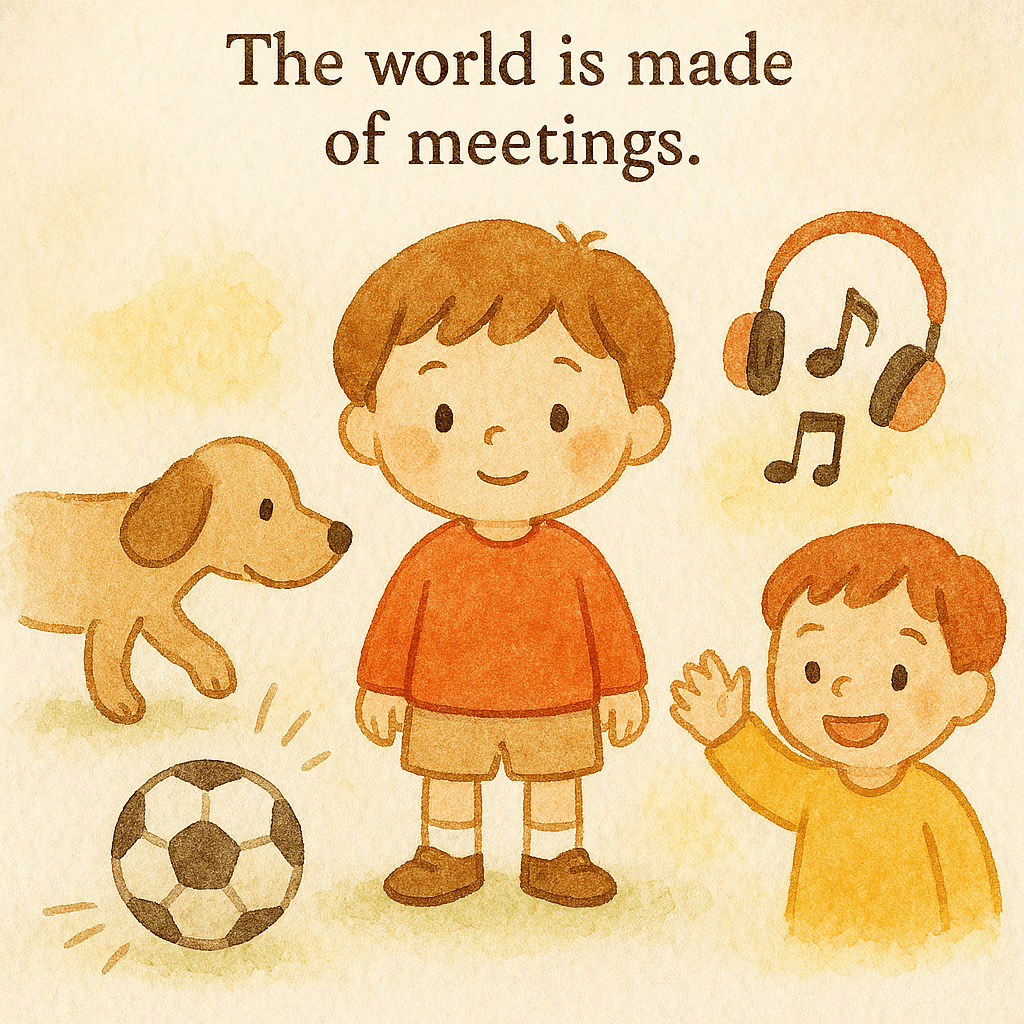
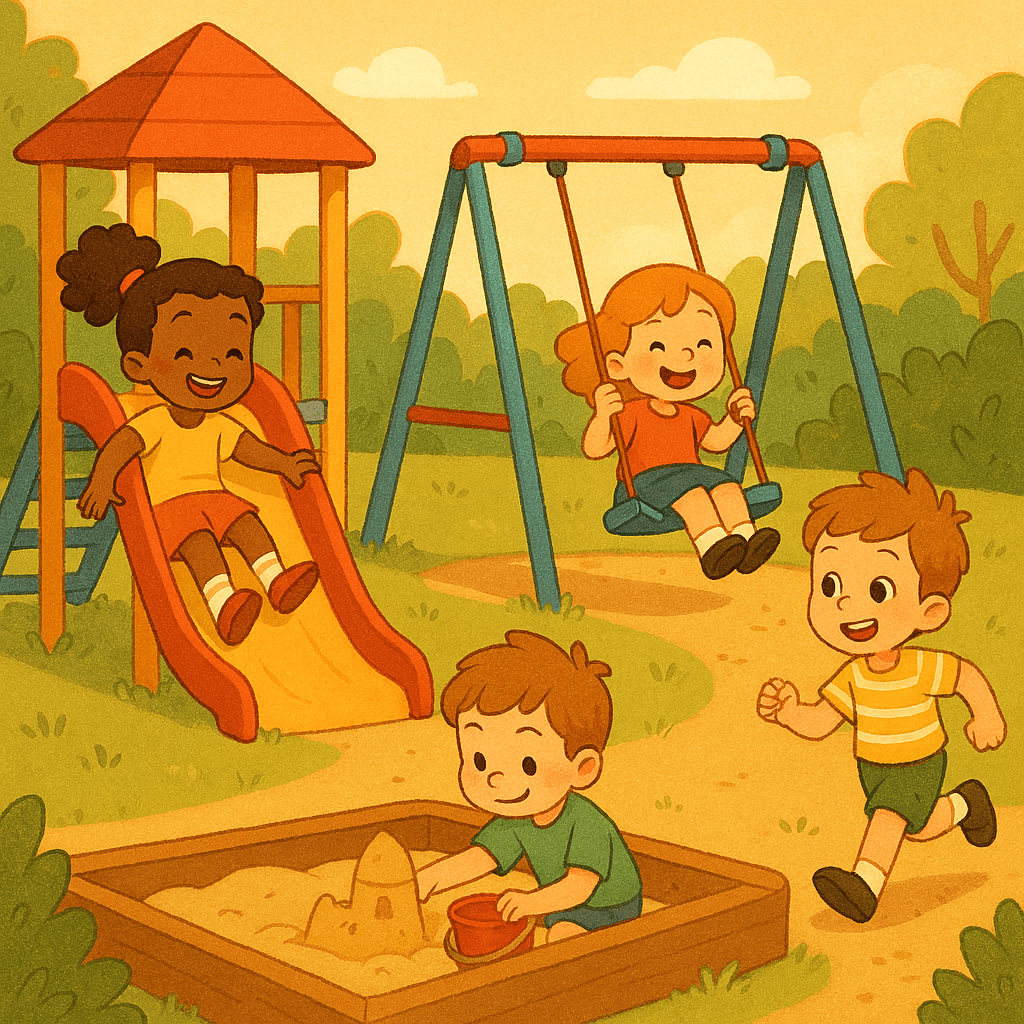
I’ve got to say these images would require a lot of textual support to be useful, and they look to be more for a 4- to 6-year-old rather than a 10-year-old. IDK
Kimi K2.5
This one ditched the LEGOs and went for a video game metaphor. More apt? I dunno. Whilst LEGO blocks were a bit antithetical, I worry that one might mistake the videogame metaphor as my supporting a simulated universe theory, so erring in a different direction.
I got this message, which isn’t a good sign that much ‘thinking’ was involved:
High demand. Switched to K2.5 Instant for speed. Upgrade to use K2.5 Thinking.
Even so, the output was again didactic. Gemini is still ahead of the pack.
Z.AI GLM-4.7
This one started with LEGOs but switched quickly. I think this is my second favourite, just behind Gemini. it opted for this to start:
Chapter 1: The Encounter
The Big Problem: The “Hand-Me-Down” Coat Imagine if your parents gave you a coat to wear, but it was way too big and had holes in it. It’s uncomfortable, but everyone tells you, “This is just how coats are.”
In this chapter, the author says that philosophers have been wearing a “holey coat” for hundreds of years. This old coat is the idea that the world is split into two separate boxes:
- Box A: Your Mind (where you think and feel).
- Box B: The World (where rocks and trees exist).
Philosophers spend all their time arguing about how Box A talks to Box B. It’s a dead end. The author says we need to stop trying to patch the holes in the old coat and just get a new one.
Perplexity
This one is a bit listy and didactic, too. Not that the ideas are bad, but they need further conversion and consideration to be useful.
Think of Chapter 1 as teaching a new way to picture the world, using “encounters” instead of “things.”
1. The old picture we’re used to
Most people start with two separate buckets:
- One bucket is “mind” (thoughts, feelings, experiences in your head).
- One bucket is “world” (tables, trees, planets, atoms).
Then they ask: “How does the mind know the world?” This often leads to puzzles like “What if everything is just in my head?”
Chapter 1 says: this starting picture is part of the problem.
Claude
Right, here’s Chapter 1 of The Architecture of Encounter explained so a ten-year-old could get the gist. I’ve kept the core idea of each one and left out everything that would make a child’s eyes glaze over.
…
For hundreds of years, philosophers have drawn the same picture: there’s your mind on one side, and the world on the other side, and the big puzzle is figuring out how your mind reaches across to touch the world. This book says that picture isn’t something anyone discovered — it’s more like an old hand-me-down that everyone just kept wearing without asking whether it still fits. Most of the famous puzzles in philosophy (what is consciousness? can machines think? what is real?) only look puzzling because of that old picture. So instead of trying harder to solve them, this book asks: what if we drew a different picture?
…
This isn’t bad, but then it gets listy, too. Again, perhaps I just don’t understand what 10-year-olds expect.
ChatGPT
Again, this had some good ideas, but…
The chapter’s central idea in child-language
Reality is not made first out of separate little blocks.
It is made first out of meetings, patterns, and pushback.
The blocks are something we notice later.
Again, I’d be hard-pressed to consider this part suitable for 10-year-olds.
One-sentence verdict on Chapter 1
Chapter 1 is the book’s declaration that encounter is ontologically before subject and object, and that many traditional philosophical problems are artefacts of starting with the wrong furniture.
In the end, Gemini wins. Details to follow…

 Philosophics