A funny thing happened on the way to the printer…
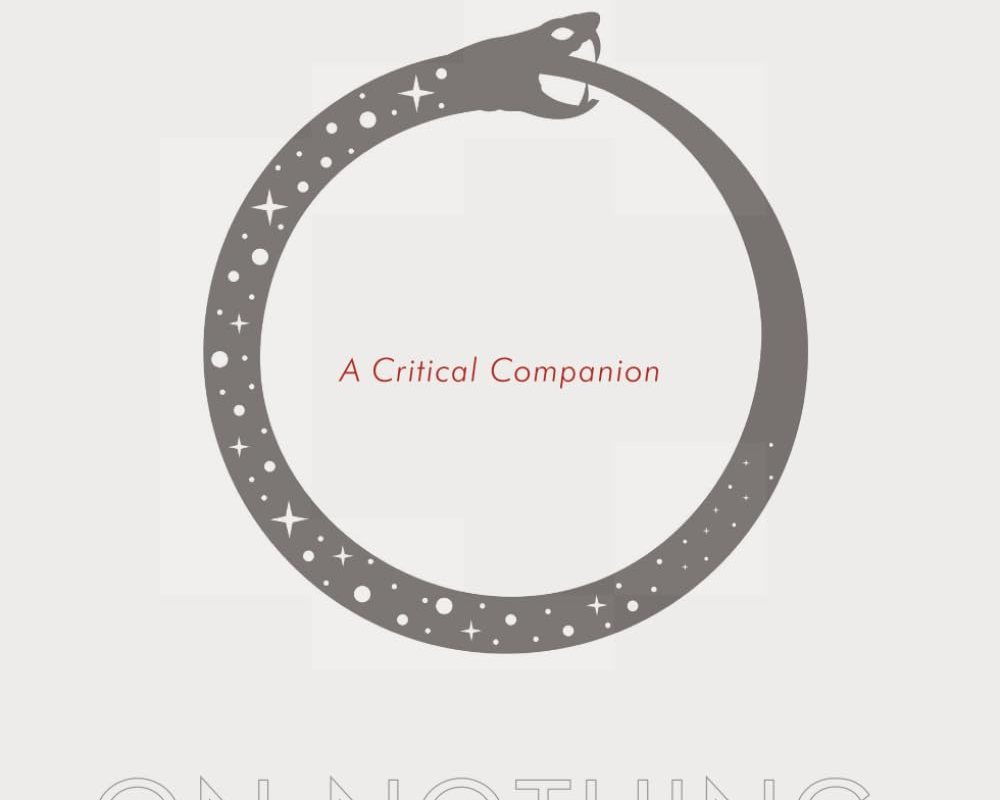
I’ve just released Meditations on Nothing: A Critical Companion to Meditations on Nothing: Notes Before Existence.
So, here’s the thing. As the title more than suggests, this is a companion guide to another. I reviewed the proofs the other day and submitted some corrections – oops. No worries; I approved the changes and submitted them for publication. Only the companion guide survived.
Historical Perspective
I wrote Meditations on Nothing: Notes Before Existence after thinking about – “meditating on, to borrow the fancy philosophical traditions of Aurelius, Descartes, et al.” I was thinking more of Wittgenstein – more Philosophical Investigations (this version) than Tractatus – and Nietzsche, never far from my mind anyway.
I had read an article named Proudhon and the Critique of Immaterial Labor: Toward a Cognitive Rent? and considered it in terms of Marx. I’ve always favoured Proudhon over Marx, despite the infamy of the latter.
In any case, after some internal dialogue down a philosophical rabbit hole, I traversed to the core of being, to a meta-nihilistic origin: What if we don’t attribute any metaphysics to our origins? I didn’t want to say ‘beginnings,’ because ‘beginning’ is a loaded term that I didn’t want to presume anyway.
As humans – whether spiritual or not – we tend to think of the sanctity of life as sacred. But it just is. But the universe doesn’t care; it simply is. It has no worth – no value. Like beginning, these are terms we’ve invented.
I don’t deny we have an emotional attachment to life – some of us, sometimes. Practically speaking, we pathologise those who don’t. A human without these emotions is broken. Artificial intelligence is often classified as a threat, as numerous dystopian narratives remind us. But sentience is another of our inventions, a fuzzy stand-in for ‘something like us, but different enough to patronise’.
We still can’t define consciousness, and sentience ends up being ‘what the sentient recognise in one another‘. Which is to say—it’s undefined because it’s circular. Funny, that.
My Goal
Even Nihilists can have goals – the Existentialist in me.
What if we return to our starting point – like a novel, the start isn’t necessarily the beginning; it’s merely an arbitrary place reserved for content on page one. What if we don’t imbue the origin with hubris and self-importance? What do we get?
That’s what this is about.
I work through some syllogistic logic:
Syllogism A
P1. Consciousness seeks coherence.
P2. Continuation provides coherence.
∴ Consciousness declares continuation good.
Next follows.
Syllogism B
P1. Only beings who feel have value.
p2. We feel.
∴ We have value.
That’s not logic—it’s species-narcissism codified as ethics.
Finally, I circle around to this:
Syllogism C
P1. All moral axioms depend on the value of life.
P2. The value of life cannot be demonstrated without presupposing it.
∴ All moral axioms rest on circular reasoning.
But Wait, There’s More
I decided to write this in the form of aphorisms – a batch of sequentially connected themes. I ended up with a sequence of six books – because, why not be pretentious?
Life began its sermon long before there was a listener.
- Book 1: The False Axiom
- Book 2: Plastic Rationalisation
- Book 3: The Reflex Loop
- Book 4: The Pathology
- Book 5: The Exposure
- Book 6: Coda
Life began its sermon long before there was a listener.
Houston, We’ve Got a Problem
I am still working with the printers to fix the technical difficulties behind Meditations on Nothing: Notes Before Existence. Luckily, the core material from this is embedded into Meditations on Nothing: A Critical Companion. What’s missing is some metanarrative.
Meditations on Nothing: Notes Before Existence is essentially a 24-page pamphlet of sorts. Each ‘book’ occupies a single page and consists of between 15 and 23 aphorisms each.
In 58 pages, Meditations on Nothing: A Critical Companion also contains these aphorisms but with exegesis and connective tissue to the underlying source material, with references to the thinkers whose shoulders I stand on.
And So What?
Ultimately, this serves as a form of apologetic for nihilism. It gets a bad rap. Most people equate it with despair. As Nietzsche did when asking, “If God is dead, now what?” I take it back even further and don’t require an Übermench to resolve it.
I’ll be creating ancillary content on YouTube once I have the bandwidth, as I am wrapping up another project, scheduled for publication in November – The Illusion of Light: Thinking After the Enlightenment, which puts a wrapper around my Anti-Enlightenment Project.
 Philosophics