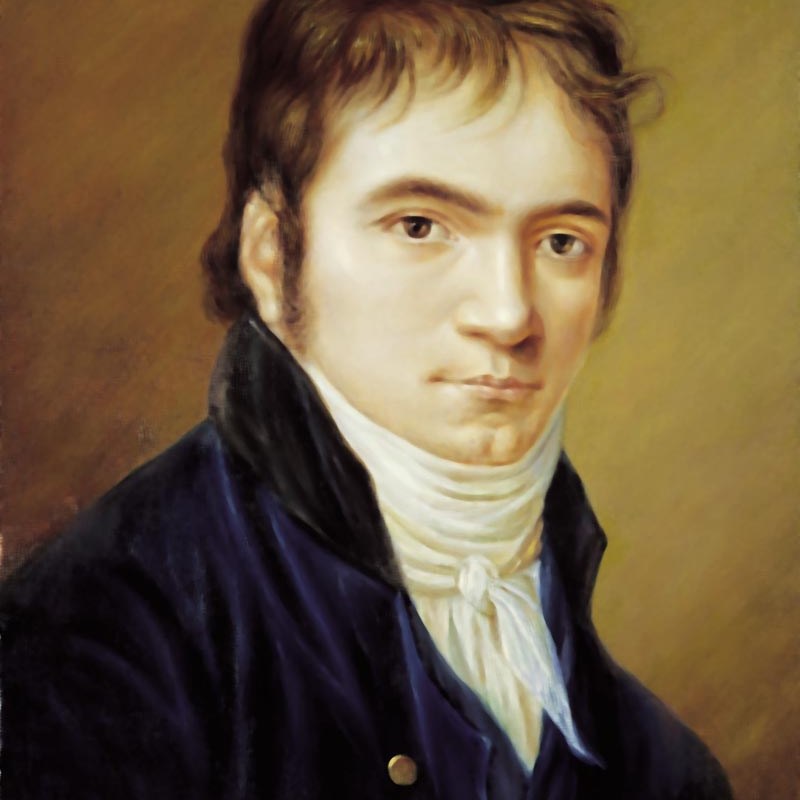
Real music comes from the heart. Rather, it’s a right-hemisphere affair. Beethoven was such a true musical genius, he had to express himself even when you couldn’t hear himself.
Above, Rick Reato gives us a little appreciation for Daniel Barenboim’s rendition of Beethoven’s Op.110 Piano Sonata. I’ve included the entire opus below. The entire 31st sonata can also be found on YouTube.
To be a musician and continue to write when deaf is the same as continuing to write as a deaf author. Musical notation is just symbols as words are symbols in a different medium. The inspiration happens in the right hemisphere and the left hemisphere translates them into symbols.
Musically speaking, I am more left-hemisphere. I have ideas that spawn from the right, but without an instrument, I couldn’t articulate them. Not even relatively. Many of my own compositions are left-hemisphere fare. I either take a mathcore approach or perhaps something along the lines of Schoenberg, where I want to convey a pattern—an example that comes to mind is Tool’s Lateralis, wherein the lyrical melody is based on the Fibonacci sequence—, or I let the instrument do the talking and transcribe the music after the fact. I know just about enough music theory to be dangerous, but not enough to be self-sufficient. This is why I always tended to collaborate with music directors or someone competent in this along the way.
My point is that the ears are not necessary to produce music—at least after you’ve figured out how to articulate it. For the record, there are blind artists and sculptors.
 Philosophics