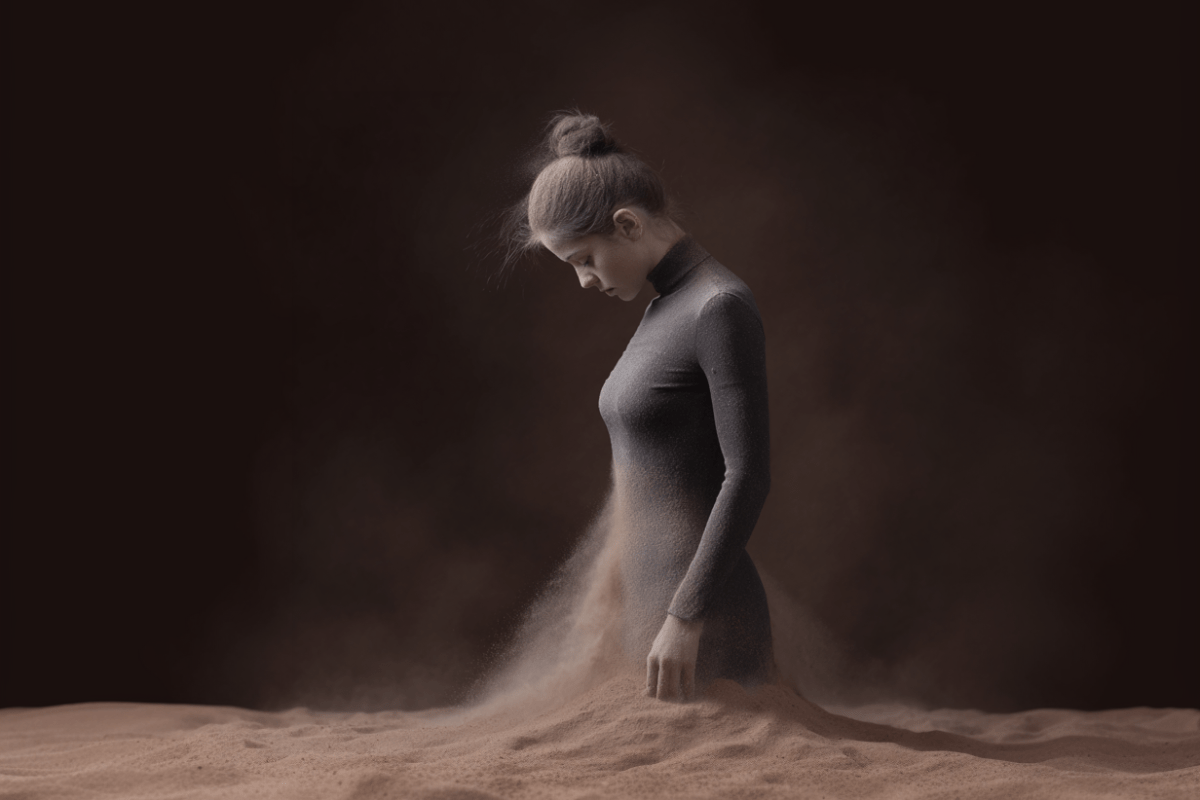
🤔 If liberation now feels indistinguishable from exhaustion, what exactly have we been freed from?
Han’s slender essay reads like a diagnosis of our psychic economy. The disciplinary society of ‘thou shalt’ has dissolved into the achievement society of ‘yes, I can’. We no longer rebel against authority; we internalise it, polishing our exhaustion until it gleams like ambition. Productivity replaces purpose. Rest becomes guilt. The subject, stripped of exterior constraint, now self-flagellates in the name of freedom.
We exploit ourselves and think we are free.
What Han captures is not mere fatigue but a civilisational pathology: the compulsion to optimise the self as though it were capital. Burnout is not the collapse of will but the logical conclusion of unlimited permission.
If liberation now feels indistinguishable from exhaustion, what exactly have we been freed from?
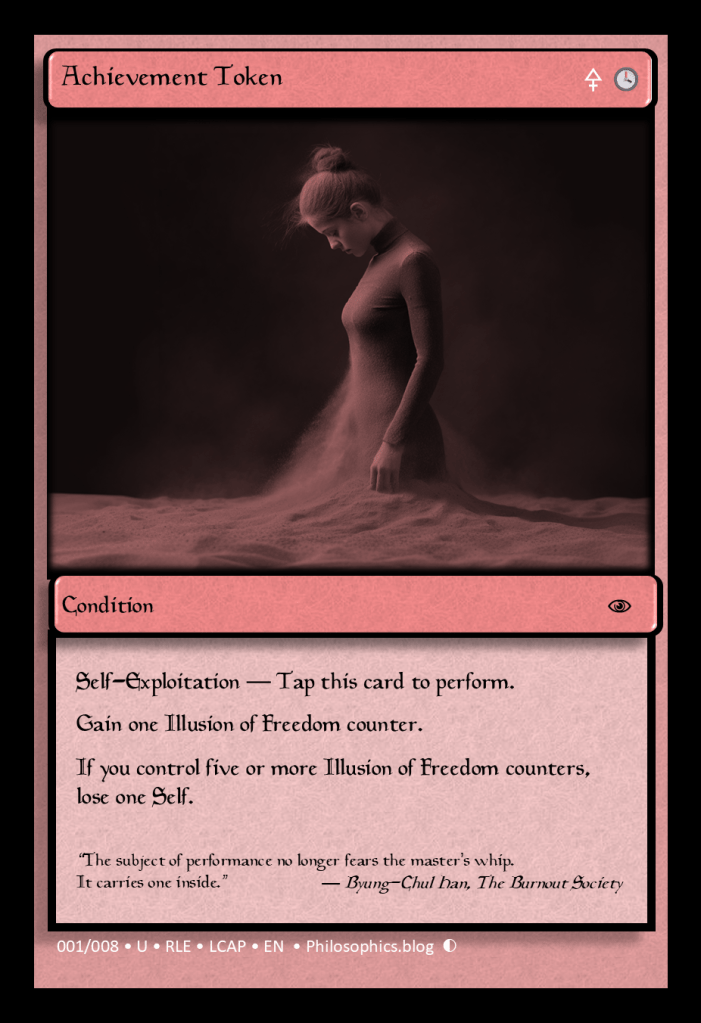
From the series Readings in Late Exhaustion – a Philosophics reflection on the maladies of modernity.
About the Series — Readings in Late Exhaustion
These cards belong to Readings in Late Exhaustion, a Philosophics project tracing the psychic and cultural costs of late capitalism.
Each card interprets a contemporary work of critical theory through the language of collectable gameplay, where identity, labour, and value become quantified acts.
The format itself is the critique: a system of self-expenditure disguised as achievement, reflection rendered as performance.
Edition: RLE / LCAP — Philosophics Press

 Philosophics
Capitalist and colonial nations (aren’t they one and the same?) were liberated from nature, which was banished with the help of philosophy (through the dichotomies of man/nature, mind/body). But this is not a good idea: nature is coming back… Dehumanizing nature in order to finally understand it is the only worthwhile, Nietzschean, course of action.
LikeLiked by 1 person